Письмо
Кто я, когда никому ничего не должна?
Мы всю жизнь ищем человека, рядом с которым наконец сможем быть собой. Но иногда самая большая потеря происходит задолго до любой встречи. Мы незаметно теряем себя.
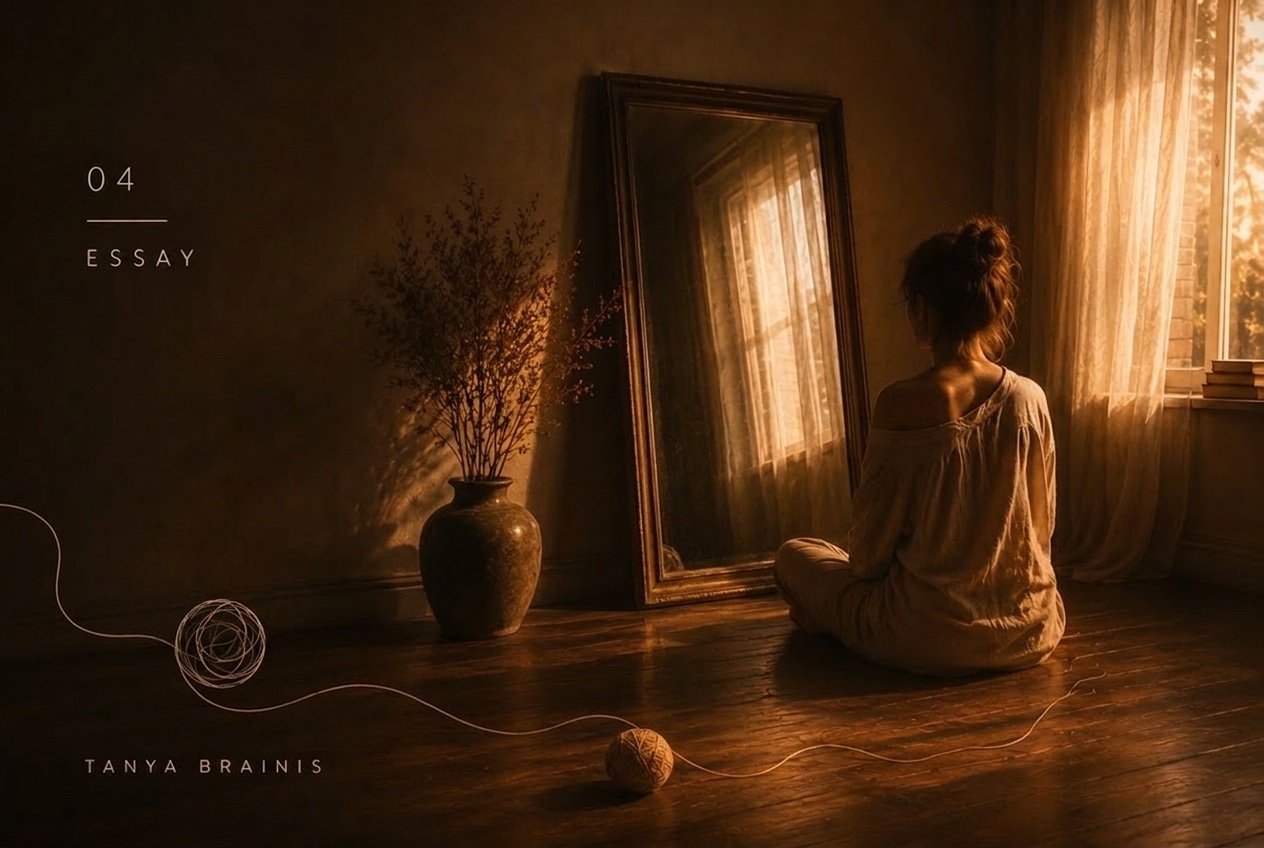
Муж с сыном уехали.
Дочь осталась ночевать у подруги.
Я закрыла за ними дверь.
И вдруг поняла, что впервые за очень долгое время дома совершенно тихо.
Никто не звал меня из другой комнаты.
Никому не нужно было приготовить еду.
Никого не нужно было выслушать, успокоить, отвезти или о чем-то предупредить.
Впереди был целый вечер, который принадлежал только мне.
Я думала, что буду наслаждаться.
Посмотрю фильм.
Почитаю книгу.
Закажу что-нибудь вкусное.
Сделаю наконец то, на что обычно не хватает времени.
Но вместо этого несколько часов бесцельно ходила по дому.
Заходила в одну комнату.
Потом в другую.
Включала телевизор и почти сразу выключала.
Открывала холодильник, хотя совсем не была голодна.
Брала в руки телефон.
Снова откладывала.
Мне было не просто скучно.
Мне было тревожно.
Будто вместе с людьми из дома исчезло что-то, что придавало смысл всему, что я делала.
В какой-то момент я села на диван и поймала себя на очень странной мысли.
Я не знаю, что делать с собой.
Не с детьми.
Не с мужем.
Не с делами.
С собой.
Впервые за долгое время рядом не было никого, кому я была нужна прямо сейчас.
И именно тогда возник вопрос, которого я раньше никогда себе не задавала.
Если сейчас никому ничего от меня не нужно…
Кто тогда я?
Мы привыкли рассказывать о себе через роли.
Я жена.
Я мама.
Я дочь.
Я подруга.
Я человек, который помогает.
Я человек, который справляется.
Мы произносим эти слова так уверенно, будто они действительно отвечают на вопрос о том, кто мы.
Но роли рассказывают не о нас.
Они рассказывают лишь о том, кем мы приходимся другим.
Мама существует рядом с ребенком.
Жена рядом с мужем.
Дочь рядом с родителями.
Специалист рядом с работой.
Но кто остается, когда все эти люди уходят из комнаты?
Когда телефон молчит.
Когда никто не ждет ответа.
Когда не нужно принимать решения, решать проблемы, поддерживать разговор или сохранять спокойствие.
Кто находится внутри той тишины, которую мы так часто называем отдыхом, но которой иногда боимся сильнее усталости?
В тот вечер я поняла, что много лет училась жить среди других.
Но почти не училась быть рядом с собой.
Мне кажется, почти каждый человек однажды влюбляется не только в другого человека.
Мы влюбляемся в обещание.
В обещание, что теперь нас наконец поймут.
Увидят.
Выберут.
Что рядом появится человек, с которым больше не придется все время быть сильной.
Не придется доказывать, что ты достойна любви.
Не придется объяснять, почему тебе больно.
Мне тоже когда-то так казалось.
Сегодня я думаю иначе.
Другой человек не может подарить нам то, чего мы сами себе никогда не позволяли.
Он не может сделать нас важными для самих себя.
Не может научить доверять собственным чувствам.
Не может вернуть нам жизнь, которую мы добровольно отдали своим обязанностям.
Иногда любовь действительно становится местом встречи двух людей.
Но иногда мы приходим в отношения не для того, чтобы встретиться.
Мы приходим, чтобы спрятаться.
От одиночества.
От страха.
От необходимости однажды посмотреть на себя без чужого восхищения, одобрения или потребности в нас.
Возможно, поэтому мысль о жизни без отношений пугает многих людей не только одиночеством.
Она пугает отсутствием ответа на вопрос:
Кем я буду, если перестану быть чьей-то?
Когда я впервые вышла замуж, мне казалось, что наконец стала взрослой.
Сегодня я понимаю, что взросление здесь было ни при чем.
Я искала место, где меня наконец выберут.
Очень скоро родилась дочь.
Жизнь наполнилась заботами, бессонными ночами и решениями, к которым невозможно подготовиться заранее.
Каждый день от меня что-то требовал.
Проснуться, даже если почти не спала.
Улыбнуться, даже если хотелось плакать.
Справиться, потому что рядом был маленький человек, который полностью от меня зависел.
Я училась быть взрослой прямо внутри этой усталости.
Училась не показывать, как мне тяжело.
Училась выполнять то, что нужно, раньше, чем успевала спросить себя, чего хочу.
А потом этот брак закончился.
И самым важным в той истории оказался даже не сам развод.
Когда я решила уйти с маленьким ребенком, я впервые по-настоящему доверилась своему внутреннему состоянию.
У меня не было безупречных аргументов.
Я не могла разложить свое решение на понятные всем причины.
Я просто знала, что больше не могу жить так.
В тот момент я выбрала себя.
Возможно, впервые в жизни.
Но почти никто не поддержал этот выбор.
Меня убеждали потерпеть.
Подумать о ребенке.
Не разрушать семью.
Не совершать ошибку.
Люди говорили о долге.
О последствиях.
О правильных решениях.
Они знали, какой должна быть моя жизнь.
Но почти никто не пытался понять, что происходило внутри меня.
Сегодня я не думаю, что все эти люди хотели причинить мне боль.
Скорее всего, каждый говорил из собственного опыта.
Из своих страхов.
Из того, что когда-то пришлось пережить ему самому.
Из убеждений, которые помогали сохранять привычный порядок жизни.
Но тогда я услышала совсем другое.
Я услышала, что моему внутреннему ощущению нельзя доверять.
Что чувства недостаточно важны, если они противоречат ожиданиям окружающих.
Что выбор может быть правильным только тогда, когда его одобряют другие.
Именно тогда произошло то, чего я еще долго не замечала.
Я не перестала принимать решения.
Я перестала полностью доверять той части себя, которая их принимала.
Если почти все вокруг уверены, что ты ошибаешься, однажды начинаешь сомневаться не только в своем поступке.
Ты начинаешь сомневаться в самом праве чувствовать то, что чувствуешь.
Именно тогда мой внутренний голос впервые стал тише.
Спустя годы в моей жизни появился человек, который позже стал моим мужем.
Мне казалось, что теперь я знаю, как строить отношения.
Я знала, чего не хочу повторять.
Знала, какие ошибки уже совершила.
Знала, насколько болезненным может быть конец семьи.
Но сегодня я понимаю, что в эти отношения вошла не только взрослая женщина с жизненным опытом.
В них вошла та часть меня, которая очень боялась снова оказаться неправой.
Недостаточной.
Слишком сложной.
Слишком чувствительной.
Слишком требовательной.
Я старалась построить отношения, которые невозможно разрушить.
Была внимательной.
Терпеливой.
Понимающей.
Старалась учитывать настроение других раньше собственного.
Не потому, что кто-то дал мне список требований.
Я сама незаметно превратила любовь в работу, которую нужно выполнять без ошибок.
Мне казалось, что если я буду достаточно мудрой, гибкой и благодарной, то отношения обязательно останутся крепкими.
И именно здесь, как мне кажется, многие из нас незаметно теряют себя.
Не в результате одной большой трагедии.
Не потому, что кто-то однажды приходит и забирает нашу личность.
Это происходит гораздо тише.
Каждый раз, когда мы не произносим важные слова, чтобы не испортить вечер.
Каждый раз, когда называем собственную боль излишней чувствительностью.
Каждый раз, когда соглашаемся, хотя внутри давно звучит «нет».
Каждый раз, когда выбираем спокойствие вокруг вместо честности внутри.
Понемногу.
Почти незаметно.
До тех пор, пока однажды не обнаруживаем, что прекрасно знаем, чего хотят от нас другие, но уже не можем ответить на простой вопрос:
«Чего хочу я?»
Долгое время я думала, что моя главная проблема заключалась в молчании.
Это правда.
Но только часть правды.
Потому что однажды я начала говорить.
Сначала неуклюже.
Иногда мои просьбы звучали как претензии.
Иногда мои попытки объяснить себя напоминали капризы.
Иногда я плакала посреди разговора и сама не могла точно сказать, что именно со мной происходит.
Сегодня я могу признать это без стыда.
Я просто училась.
Представьте человека, который никогда не ходил.
Его первые шаги не будут красивыми.
Он будет спотыкаться.
Падать.
Снова вставать.
Никто не ожидает от ребенка идеальной походки в тот день, когда он впервые отпускает руку взрослого.
Но почему-то от человека, который впервые пытается говорить о своей внутренней жизни, мы ждем безупречных формулировок.
Спокойного голоса.
Убедительных аргументов.
Правильно выбранного момента.
А что, если человек сам еще не знает названий собственных чувств?
Как объяснить пустоту?
Как описать одиночество рядом с тем, кого любишь?
Как сказать, что дело не в цветах, подарках или совместных фотографиях?
Что тебе хочется почувствовать себя важной не на словах, а внутри общей жизни.
Замеченной.
Услышанной.
Понятой.
Я пыталась говорить о том, чего сама еще не умела понимать.
Плакала не потому, что хотела вызвать жалость.
Просто иногда слезы появлялись раньше слов.
Постепенно у меня появился голос.
Не идеальный.
Не всегда спокойный.
Не всегда удобный.
Но мой.
Я научилась отказываться.
Научилась спорить.
Позволила себе иметь мнение, которое могло кому-то не понравиться.
Стала смеяться громче.
Перестала прятать сарказм.
Начала замечать собственное раздражение раньше, чем оно превращалось в отчаяние.
Иногда мне кажется, что после многих лет внутренней тишины я стала говорить слишком много.
Как человек, которого долго держали под водой и который, наконец вынырнув, никак не может надышаться.
Со стороны это могло выглядеть резко.
Иногда даже жестоко.
Но я не становилась жестче.
Я просто перестала переводить свои чувства на язык, максимально удобный для окружающих.
И вместе с голосом начало меняться мое восприятие.
Я стала замечать то, что раньше автоматически объясняла.
Холодность перестала казаться особенностью характера.
Контроль перестал выглядеть как забота.
Страх потерять человека перестал быть доказательством любви.
Молчание, за которым месяцами не следовал разговор, больше нельзя было объяснить одной лишь усталостью.
Люди вокруг не обязательно изменились.
Изменилась я.
Честность меняет не только то, как человек говорит.
Она меняет то, как он смотрит.
Я стала чаще смотреть людям в глаза.
Не потому, что научилась видеть их насквозь.
А потому, что перестала отворачиваться от того, что вижу.
Это действительно может пугать.
Не только других.
Иногда ясность пугает прежде всего нас самих.
Потому что, однажды увидев, уже невозможно вернуться в прежнюю историю и продолжать рассказывать ее себе теми же словами.
Но самым трудным оказалось другое.
Чем яснее я начинала видеть людей рядом, тем отчетливее понимала, сколько лет не замечала саму себя.
Иногда я открываю Instagram.
Красивые завтраки.
Цветы.
Поездки.
Объятия.
Счастливые семьи.
Я смотрю на эти фотографии и понимаю, что совершенно ничего не знаю о жизни людей после того, как выключается камера.
Я не знаю, разговаривают ли они друг с другом.
Умеют ли признавать свои ошибки.
Интересуются ли тем, что происходит внутри человека рядом.
Не знаю, плакал ли кто-то из них прошлой ночью, стараясь никого не разбудить.
Не знаю, сколько одиночества может поместиться внутри очень красивой фотографии.
Поэтому я больше не завидую чужим картинкам.
Не потому, что думаю, будто за каждой из них скрывается несчастье.
А потому, что счастье невозможно доказать изображением.
Оно вообще редко происходит в тех местах, куда направлена камера.
Оно живет в интонации, с которой люди разговаривают дома.
В возможности сказать правду и не бояться наказания молчанием.
В способности оставаться рядом не только с удобной версией человека.
В свободе не изображать близость, а действительно ее чувствовать.
Я видела одиноких людей в браке.
И видела счастливых людей, которые вечером возвращаются в пустой дом.
Семейное положение ничего не говорит о качестве внутренней жизни.
Кольцо не измеряет близость.
Количество совместных фотографий не показывает, сколько между людьми доверия.
Иногда самые красивые фотографии делают те, кто давно перестал смотреть друг другу в глаза.
А иногда человек, живущий один, впервые за много лет не чувствует одиночества.
Есть одна вещь, которую я поняла слишком поздно.
Любящий человек не умеет читать мысли.
Невозможно услышать просьбу, которую никто не произнес.
Невозможно исполнить желание, о существовании которого даже не подозреваешь.
Невозможно построить близость, если один человек постоянно угадывает, а другой постоянно надеется быть понятым без слов.
Но есть и другая правда.
Иногда мы говорим.
Стараемся.
Подбираем слова.
Возвращаемся к одному разговору снова и снова.
Становимся откровеннее, чем когда-либо были с собой.
И все равно остаемся неуслышанными.
Потому что для близости недостаточно одного человека, который набрался смелости открыть сердце.
По другую сторону тоже должен находиться человек, готовый услышать.
Не только слова.
Но и позволить этим словам что-то изменить.
Наверное, именно тогда я перестала искать виноватого.
Вместо вопроса:
«Почему меня не поняли?»
появился другой.
«Были ли мы вообще готовы встретиться друг с другом настоящими?»
Не с привычными ролями.
Не с образом удобного партнера.
Не с человеком, каким он был много лет назад.
А с живым, меняющимся, иногда противоречивым человеком, который находится рядом сейчас.
Не все отношения выдерживают такую встречу.
Иногда мы хотим, чтобы человек был честным, пока его честность не требует от нас измениться.
Хотим, чтобы он говорил о чувствах, пока его слова не нарушают привычный порядок.
Хотим близости.
Но не всегда готовы увидеть того, кто существует за пределами функции, которую выполняет в нашей жизни.
Мы часто говорим:
«Я потеряла себя».
Но себя невозможно потерять за один день.
Самость исчезает постепенно.
Сначала человек перестает замечать маленькие желания.
Потом откладывает большие.
Потом привыкает спрашивать мнение других раньше, чем прислушивается к собственному.
Он продолжает жить.
Любить.
Работать.
Заботиться.
Улыбаться на фотографиях.
Выполнять обязанности.
Со стороны ничего не рушится.
Но внутри остается все меньше пространства, которое принадлежит только ему.
Наверное, опасность социальных ролей не в самих ролях.
Они могут быть прекрасными.
Я люблю быть мамой.
Мне важны отношения.
Мне нравится помогать людям.
Некоторые роли становятся глубоким и осознанным выбором.
Проблема начинается тогда, когда роль перестает быть частью жизни и становится единственным доказательством нашей ценности.
Когда нам необходимо быть нужными, чтобы чувствовать, что мы существуем.
Когда забота о других становится единственным способом избежать встречи с собой.
Когда мы уже не понимаем, где заканчивается любовь и начинается страх потерять свое место в чужой жизни.
Некоторые роли мы выбираем.
Некоторые получаем при рождении.
Некоторые принимаем, потому что так живут все.
Некоторые продолжаем исполнять, хотя давно из них выросли.
Мы можем годами оставаться сильными, потому что однажды нам не разрешили быть слабыми.
Можем спасать всех вокруг, потому что не знаем, как позаботиться о себе.
Можем быть миротворцами в семье, потому что с детства привыкли считать любой конфликт угрозой.
Можем строить жизнь, которая выглядит правильной, и при этом ни разу не спросить себя, подходит ли она именно нам.
Самое страшное не в том, что общество предлагает нам роли.
Самое страшное начинается тогда, когда мы перестаем отличать предложенную роль от собственной личности.
В тот вечер, сидя одна в тихой квартире, я поняла, что свобода не всегда ощущается как счастье.
Иногда сначала она ощущается как пустота.
Потому что, когда исчезают обязанности, становится слышно то, что мы годами заглушали занятостью.
Свобода задает неприятные вопросы.
Что я люблю, когда мне не нужно учитывать вкусы других?
Как я хочу провести день, если никто не ждет от меня определенного поведения?
О чем я думаю, когда мне не нужно поддерживать разговор?
Какие решения приняла бы, если бы не боялась разочаровать?
Какие части моей жизни действительно выбрала я?
А какие продолжаю сохранять только потому, что однажды согласилась считать их правильными?
Я не нашла всех ответов в тот вечер.
Не посмотрела прекрасный фильм.
Не начала новую книгу.
Не устроила себе красивый ужин при свечах.
Я просто сидела в тишине.
И впервые не пыталась от нее убежать.
Наверное, встреча с собой редко бывает красивой.
Она почти никогда не похожа на вдохновляющие цитаты из социальных сетей.
Иногда сначала приходится познакомиться с собственной растерянностью.
С желаниями, которым давно не давали места.
С обидой, которую называли неблагодарностью.
С усталостью, которую привыкли считать слабостью.
С мечтами, отложенными настолько давно, что они начинают казаться чужими.
Но, возможно, именно так и возвращается самость.
Не как внезапное озарение.
А как медленное восстановление отношений с той частью себя, которую мы слишком долго просили подождать.
Мне понадобилось почти сорок лет, чтобы понять одну неприятную вещь.
Никто не украл мою жизнь.
Никто однажды не пришел и не забрал мой голос.
Я постепенно отказывалась от него сама.
Каждый раз совсем немного.
Ради любви.
Ради мира.
Ради желания не разочаровать.
Ради надежды, что однажды кто-то оценит, сколько всего я смогла выдержать.
Я так долго измеряла себя тем, насколько хорошо справляюсь с чужими потребностями, что тишина показалась мне отсутствием жизни.
Хотя именно в ней впервые появилась возможность услышать собственную.
Сегодня я не хочу отказаться от своих ролей.
Я не хочу переставать быть мамой.
Не хочу переставать любить.
Не хочу переставать заботиться.
Я хочу другого.
Чтобы за каждой из этих ролей оставалась я.
Не функция.
Не удобный образ.
Не человек, существующий только в тот момент, когда кому-то нужен.
А живая женщина.
Со своими желаниями.
Страхами.
Противоречиями.
И правом меняться.
Мне кажется, взросление начинается не тогда, когда мы берем на себя все больше обязанностей.
А тогда, когда перестаем путать ответственность с исчезновением себя.
Когда начинаем спрашивать:
Какие из своих ролей я действительно выбрала?
Какие достались мне по наследству?
Какие приносят мне радость?
Какие я продолжаю исполнять только из страха потерять любовь или одобрение?
Когда я последний раз оставалась наедине с собой и не пыталась немедленно заполнить эту встречу шумом?
Кого я вижу в зеркале, если на мгновение забываю, кем должна быть для остальных?
Представьте, что завтра утром исчезнут все ваши роли.
Вы больше не муж.
Не жена.
Не мама.
Не отец.
Не работник.
Не спасатель семьи.
Не тот человек, который всегда справляется.
Не тот, кому постоянно звонят, когда что-то случилось.
Кто тогда проснется?
Возможно, сначала вы тоже не будете знать, чем заняться.
Будете ходить из комнаты в комнату.
Брать телефон.
Открывать холодильник.
Включать телевизор.
Лишь бы не слышать тишину.
Но, может быть, однажды вы все-таки останетесь.
Сядете рядом с собой.
Посмотрите на человека, которого столько лет знали только по его обязанностям.
И впервые спросите не о том, что он должен сделать для других.
А о том,
как он живет.
чего хочет.
о чем молчит.
кем мог бы стать, если бы больше не нужно было заслуживать право быть собой.
И, возможно, самые важные отношения в нашей жизни начинаются именно в этот момент.
Не тогда, когда рядом появляется другой человек.
А тогда, когда мы наконец перестаем проходить мимо самих себя.
Письмо
Who am I when I owe nothing to anyone?
We spend our lives looking for someone with whom we can finally be ourselves. Sometimes the greatest loss happens long before any meeting. We lose ourselves without noticing.
My husband and son left.
My daughter stayed overnight at a friend’s.
I closed the door behind them.
And suddenly realized that for the first time in a very long while the house was completely quiet.
No one was calling me from another room.
No one needed food prepared.
No one needed to be listened to, soothed, driven somewhere, or warned about something.
Ahead of me was a whole evening that belonged only to me.
I thought I would enjoy it.
Watch a film.
Read a book.
Order something delicious.
Finally do the things I usually never have time for.
But instead I wandered around the house aimlessly for several hours.
I went into one room.
Then into another.
Turned on the television and almost immediately turned it off.
Opened the fridge even though I wasn’t hungry at all.
Picked up my phone.
Put it down again.
I wasn’t simply bored.
I was anxious.
As if, along with the people, something had left the house that gave meaning to everything I did.
At some point I sat down on the sofa and caught myself on a very strange thought.
I don’t know what to do with myself.
Not with the children.
Not with my husband.
Not with tasks.
With myself.
For the first time in a long while there was no one nearby who needed me right now.
And that was when a question appeared that I had never asked myself before.
If right now no one needs anything from me…
Who am I then?
We are used to telling about ourselves through roles.
I am a wife.
I am a mother.
I am a daughter.
I am a friend.
I am a person who helps.
I am a person who manages.
We say these words so confidently, as if they truly answer the question of who we are.
But roles do not tell us about us.
They only tell us who we are to others.
A mother exists next to a child.
A wife next to a husband.
A daughter next to her parents.
A professional next to work.
But who remains when all those people leave the room?
When the phone is silent.
When no one is waiting for an answer.
When you don’t need to make decisions, solve problems, keep a conversation going, or stay calm.
Who is there inside that silence we so often call rest, but which we sometimes fear more than exhaustion?
That evening I realized I had spent many years learning to live among others.
But I had almost never learned to be with myself.
I think almost every person once falls in love not only with another person.
We fall in love with a promise.
The promise that now we will finally be understood.
Seen.
Chosen.
That someone will appear beside us with whom we no longer have to be strong all the time.
No longer have to prove that we are worthy of love.
No longer have to explain why we hurt.
I once thought so too.
Today I think differently.
Another person cannot give us what we have never allowed ourselves.
He cannot make us important to ourselves.
Cannot teach us to trust our own feelings.
Cannot return to us the life we voluntarily gave away to our duties.
Sometimes love truly becomes a meeting place for two people.
But sometimes we enter a relationship not in order to meet.
We come in order to hide.
From loneliness.
From fear.
From the necessity of one day looking at ourselves without someone else’s admiration, approval, or need for us.
Perhaps that is why the thought of a life without a relationship frightens many people not only with loneliness.
It frightens them with the absence of an answer to the question:
Who will I be if I stop being someone’s?
When I first got married, it seemed to me that I had finally become an adult.
Today I understand that growing up had nothing to do with it.
I was looking for a place where I would finally be chosen.
Very soon a daughter was born.
Life filled with cares, sleepless nights, and decisions you cannot prepare for in advance.
Every day demanded something of me.
To wake up even if I had barely slept.
To smile even if I wanted to cry.
To manage, because next to me was a small person who depended on me completely.
I learned to be an adult right inside that exhaustion.
Learned not to show how hard it was for me.
Learned to do what was needed before I had time to ask myself what I wanted.
And then that marriage ended.
And the most important thing in that story was not even the divorce itself.
When I decided to leave with a small child, for the first time I truly trusted my inner state.
I had no impeccable arguments.
I could not break my decision down into reasons everyone would understand.
I simply knew I could no longer live that way.
In that moment I chose myself.
Perhaps for the first time in my life.
But almost no one supported that choice.
They urged me to endure.
To think of the child.
Not to destroy the family.
Not to make a mistake.
People spoke of duty.
Of consequences.
Of the right decisions.
They knew what my life should look like.
But almost no one tried to understand what was happening inside me.
Today I don’t think all those people wanted to hurt me.
Most likely each of them spoke from their own experience.
From their own fears.
From what they themselves once had to live through.
From beliefs that helped preserve the familiar order of life.
But back then I heard something completely different.
I heard that my inner feeling could not be trusted.
That feelings are not important enough if they contradict the expectations of those around you.
That a choice can only be right when others approve of it.
It was then that something happened which I did not notice for a long time.
I did not stop making decisions.
I stopped fully trusting the part of myself that made them.
If almost everyone around you is sure you are wrong, one day you begin to doubt not only your action.
You begin to doubt the very right to feel what you feel.
It was then that my inner voice first grew quieter.
Years later a person appeared in my life who later became my husband.
It seemed to me that now I knew how to build a relationship.
I knew what I did not want to repeat.
I knew what mistakes I had already made.
I knew how painful the end of a family could be.
But today I understand that I entered that relationship not only as an adult woman with life experience.
Into it also entered the part of me that was very afraid of turning out wrong again.
Not enough.
Too complicated.
Too sensitive.
Too demanding.
I tried to build a relationship that could not be destroyed.
I was attentive.
Patient.
Understanding.
I tried to take others’ moods into account before my own.
Not because someone had given me a list of requirements.
I myself quietly turned love into a job that had to be done without mistakes.
It seemed to me that if I were wise enough, flexible enough, and grateful enough, the relationship would certainly stay strong.
And it is here, I think, that many of us quietly lose ourselves.
Not as a result of one great tragedy.
Not because someone one day comes and takes our personality away.
It happens much more quietly.
Every time we don’t say important words so as not to spoil the evening.
Every time we call our own pain excessive sensitivity.
Every time we agree even though “no” has long been sounding inside.
Every time we choose peace around us instead of honesty within.
Little by little.
Almost unnoticed.
Until one day we discover that we know perfectly well what others want from us, but can no longer answer a simple question:
“What do I want?”
For a long time I thought my main problem was silence.
That is true.
But only part of the truth.
Because one day I began to speak.
At first clumsily.
Sometimes my requests sounded like complaints.
Sometimes my attempts to explain myself resembled tantrums.
Sometimes I cried in the middle of a conversation and could not even say exactly what was happening to me.
Today I can admit that without shame.
I was simply learning.
Imagine a person who has never walked.
Their first steps will not be beautiful.
They will stumble.
Fall.
Get up again.
No one expects a perfect gait from a child on the day they first let go of an adult’s hand.
But for some reason, from a person who is trying for the first time to speak about their inner life, we expect impeccable phrasing.
A calm voice.
Convincing arguments.
The perfectly chosen moment.
But what if the person themselves does not yet know the names of their own feelings?
How do you explain emptiness?
How do you describe loneliness next to someone you love?
How do you say that it isn’t about flowers, gifts, or shared photographs?
That you want to feel important not in words, but inside a shared life.
Noticed.
Heard.
Understood.
I was trying to talk about things I myself did not yet know how to understand.
I cried not because I wanted to provoke pity.
Sometimes tears simply appeared before words.
Gradually I acquired a voice.
Not a perfect one.
Not always calm.
Not always convenient.
But mine.
I learned to refuse.
I learned to argue.
I allowed myself to have an opinion that might not please someone.
I began to laugh louder.
I stopped hiding my sarcasm.
I began to notice my own irritation before it turned into despair.
Sometimes it seems to me that after many years of inner silence I began to talk too much.
Like a person who has been held underwater for a long time and who, finally surfacing, cannot get enough air.
From the outside it could look sharp.
Sometimes even cruel.
But I was not becoming harsher.
I was simply no longer translating my feelings into the language most convenient for those around me.
And along with the voice, my perception began to change.
I started noticing what I used to explain away automatically.
Coldness no longer seemed like a character trait.
Control no longer looked like care.
The fear of losing someone no longer counted as proof of love.
Silence after which no conversation followed for months could no longer be explained by tiredness alone.
The people around me did not necessarily change.
I changed.
Honesty changes not only how a person speaks.
It changes how they look.
I began to look people in the eyes more often.
Not because I had learned to see through them.
But because I stopped turning away from what I see.
That can truly be frightening.
Not only for others.
Sometimes clarity frightens us ourselves first of all.
Because once you have seen, it is already impossible to return to the old story and keep telling it to yourself in the same words.
But the hardest thing turned out to be something else.
The clearer I began to see the people beside me, the more distinctly I understood how many years I had not been noticing myself.
Sometimes I open Instagram.
Beautiful breakfasts.
Flowers.
Trips.
Embraces.
Happy families.
I look at those photographs and understand that I know absolutely nothing about people’s lives after the camera is turned off.
I don’t know whether they talk to each other.
Whether they know how to admit their mistakes.
Whether they are interested in what is happening inside the person next to them.
I don’t know whether one of them cried last night, trying not to wake anyone.
I don’t know how much loneliness can fit inside a very beautiful photograph.
That is why I no longer envy other people’s pictures.
Not because I think unhappiness hides behind every one of them.
But because happiness cannot be proven by an image.
It rarely happens in the places where the camera is pointed at all.
It lives in the intonation with which people speak at home.
In the possibility of telling the truth without fearing the punishment of silence.
In the ability to stay beside not only the convenient version of a person.
In the freedom not to perform closeness, but actually to feel it.
I have seen lonely people in marriage.
And I have seen happy people who return in the evening to an empty house.
Marital status says nothing about the quality of an inner life.
A ring does not measure closeness.
The number of shared photographs does not show how much trust there is between people.
Sometimes the most beautiful photographs are taken by those who long ago stopped looking into each other’s eyes.
And sometimes a person who lives alone does not feel lonely for the first time in many years.
There is one thing I understood too late.
A loving person cannot read minds.
It is impossible to hear a request that no one has spoken.
It is impossible to fulfill a wish whose existence you do not even suspect.
It is impossible to build closeness if one person is constantly guessing and the other is constantly hoping to be understood without words.
But there is another truth as well.
Sometimes we speak.
We try.
We search for words.
We return to the same conversation again and again.
We become more open than we have ever been with ourselves.
And still we remain unheard.
Because for closeness one person who has gathered the courage to open their heart is not enough.
On the other side there must also be a person ready to hear.
Not only the words.
But also to allow those words to change something.
Perhaps that was when I stopped looking for someone to blame.
Instead of the question:
“Why didn’t they understand me?”
another appeared.
“Were we even ready to meet each other as we really are?”
Not with the familiar roles.
Not with the image of a convenient partner.
Not with the person they were many years ago.
But with a living, changing, sometimes contradictory person who is beside us right now.
Not every relationship can withstand such a meeting.
Sometimes we want a person to be honest until their honesty requires us to change.
We want them to speak about feelings until their words disturb the familiar order.
We want closeness.
But we are not always ready to see the one who exists beyond the function they perform in our life.
We often say:
“I lost myself.”
But you cannot lose yourself in a single day.
The self disappears gradually.
First a person stops noticing small desires.
Then they postpone the large ones.
Then they get used to asking others’ opinions before listening to their own.
They keep living.
Loving.
Working.
Caring.
Smiling in photographs.
Performing duties.
From the outside nothing is collapsing.
But inside there remains less and less space that belongs only to them.
Perhaps the danger of social roles is not in the roles themselves.
They can be wonderful.
I love being a mother.
Relationships matter to me.
I like helping people.
Some roles become a deep and conscious choice.
The problem begins when a role stops being part of life and becomes the only proof of our worth.
When we need to be needed in order to feel that we exist.
When caring for others becomes the only way to avoid meeting ourselves.
When we no longer understand where love ends and the fear of losing our place in someone else’s life begins.
Some roles we choose.
Some we receive at birth.
Some we accept because that is how everyone lives.
Some we keep performing long after we have outgrown them.
We can stay strong for years because one day we were not allowed to be weak.
We can save everyone around us because we don’t know how to take care of ourselves.
We can be peacemakers in the family because from childhood we learned to treat any conflict as a threat.
We can build a life that looks right and never once ask ourselves whether it suits us.
The most frightening thing is not that society offers us roles.
The most frightening thing begins when we stop distinguishing the offered role from our own personality.
That evening, sitting alone in a quiet apartment, I understood that freedom does not always feel like happiness.
Sometimes at first it feels like emptiness.
Because when duties disappear, you begin to hear what we have been drowning out for years with busyness.
Freedom asks uncomfortable questions.
What do I love when I don’t have to take others’ tastes into account?
How do I want to spend the day if no one expects a certain behavior from me?
What do I think about when I don’t need to keep a conversation going?
What decisions would I make if I were not afraid of disappointing anyone?
Which parts of my life did I truly choose?
And which ones do I keep preserving only because I once agreed to consider them right?
I did not find all the answers that evening.
I did not watch a wonderful film.
I did not start a new book.
I did not arrange a beautiful candlelit dinner for myself.
I simply sat in the silence.
And for the first time I did not try to run from it.
Perhaps a meeting with yourself is rarely beautiful.
It almost never looks like inspiring quotes from social media.
Sometimes first you have to get acquainted with your own confusion.
With desires that have long been given no room.
With resentment that was called ungratefulness.
With tiredness you learned to consider weakness.
With dreams postponed so long that they begin to seem foreign.
But perhaps that is exactly how the self returns.
Not as a sudden revelation.
But as a slow restoration of a relationship with the part of yourself you asked for too long to wait.
It took me almost forty years to understand one unpleasant thing.
No one stole my life.
No one one day came and took my voice away.
I gradually gave it up myself.
Each time just a little.
For the sake of love.
For the sake of peace.
For the sake of not wanting to disappoint.
For the hope that one day someone would appreciate how much I had managed to endure.
I measured myself for so long by how well I handled other people’s needs that silence seemed to me like the absence of life.
Although it was precisely there that the chance first appeared to hear my own.
Today I do not want to give up my roles.
I do not want to stop being a mother.
I do not want to stop loving.
I do not want to stop caring.
I want something else.
That behind each of these roles I remain.
Not a function.
Not a convenient image.
Not a person who exists only in the moment when someone needs her.
But a living woman.
With her own desires.
Fears.
Contradictions.
And the right to change.
I think growing up begins not when we take on more and more duties.
But when we stop confusing responsibility with the disappearance of ourselves.
When we begin to ask:
Which of my roles did I truly choose?
Which were handed down to me?
Which bring me joy?
Which do I keep performing only out of fear of losing love or approval?
When was the last time I stayed alone with myself and did not try to fill that meeting immediately with noise?
Whom do I see in the mirror if for a moment I forget who I am supposed to be for everyone else?
Imagine that tomorrow morning all your roles disappear.
You are no longer a husband.
Not a wife.
Not a mother.
Not a father.
Not an employee.
Not the family rescuer.
Not the person who always manages.
Not the one people always call when something happens.
Who then wakes up?
Perhaps at first you also will not know what to do.
You will walk from room to room.
Pick up the phone.
Open the fridge.
Turn on the television.
Anything not to hear the silence.
But maybe one day you will stay after all.
Sit down next to yourself.
Look at the person you have known for so many years only by their duties.
And for the first time ask not about what they must do for others.
But about
how they live.
what they want.
what they stay silent about.
who they could become if they no longer had to earn the right to be themselves.
And perhaps the most important relationship in our lives begins precisely in that moment.
Not when another person appears beside us.
But when we finally stop walking past ourselves.
Письмо
¿Quién soy cuando no le debo nada a nadie?
Pasamos la vida buscando a alguien con quien por fin podamos ser nosotros. A veces la mayor pérdida ocurre mucho antes de cualquier encuentro. Nos perdemos sin darnos cuenta.
Mi marido y mi hijo se fueron.
Mi hija se quedó a dormir en casa de una amiga.
Cerré la puerta tras ellos.
Y de pronto comprendí que por primera vez en mucho tiempo la casa estaba completamente en silencio.
Nadie me llamaba desde otra habitación.
A nadie había que prepararle comida.
A nadie había que escuchar, calmar, llevar a algún sitio o avisar de algo.
Delante tenía una tarde entera que me pertenecía solo a mí.
Pensé que iba a disfrutarlo.
Ver una película.
Leer un libro.
Pedir algo rico.
Hacer por fin aquello para lo que normalmente no me alcanza el tiempo.
Pero en cambio varias horas di vueltas por la casa sin rumbo.
Entraba en una habitación.
Después en otra.
Encendía la televisión y casi de inmediato la apagaba.
Abría la nevera aunque no tenía nada de hambre.
Tomaba el teléfono en las manos.
Lo dejaba otra vez.
No estaba simplemente aburrida.
Estaba inquieta.
Como si junto con las personas hubiera desaparecido de la casa algo que daba sentido a todo lo que hacía.
En algún momento me senté en el sofá y me atrapé en un pensamiento muy extraño.
No sé qué hacer conmigo.
No con los hijos.
No con el marido.
No con las tareas.
Conmigo.
Por primera vez en mucho tiempo no había nadie cerca a quien yo le hiciera falta en ese momento.
Y fue entonces cuando surgió una pregunta que nunca antes me había hecho.
Si ahora nadie necesita nada de mí…
¿Quién soy entonces?
Estamos acostumbrados a contarnos a través de roles.
Soy esposa.
Soy mamá.
Soy hija.
Soy amiga.
Soy la persona que ayuda.
Soy la persona que se las arregla.
Pronunciamos estas palabras con tanta seguridad, como si de verdad respondieran a la pregunta de quiénes somos.
Pero los roles no cuentan de nosotros.
Solo cuentan quiénes somos para los demás.
La madre existe junto al hijo.
La esposa junto al marido.
La hija junto a los padres.
El profesional junto al trabajo.
¿Pero quién queda cuando todas esas personas salen de la habitación?
Cuando el teléfono calla.
Cuando nadie espera una respuesta.
Cuando no hay que tomar decisiones, resolver problemas, sostener una conversación o mantener la calma.
¿Quién está dentro de ese silencio que tan a menudo llamamos descanso, pero al que a veces tememos más que al cansancio?
Esa tarde comprendí que durante muchos años había aprendido a vivir entre otros.
Pero casi no había aprendido a estar conmigo misma.
Me parece que casi cada persona se enamora alguna vez no solo de otra persona.
Nos enamoramos de una promesa.
De la promesa de que ahora por fin nos comprenderán.
Nos verán.
Nos elegirán.
De que aparecerá alguien a cuyo lado ya no habrá que ser fuerte todo el tiempo.
Ya no habrá que demostrar que eres digna de amor.
Ya no habrá que explicar por qué te duele.
A mí también me pareció así alguna vez.
Hoy pienso de otro modo.
Otra persona no puede regalarnos lo que nosotras mismas nunca nos hemos permitido.
No puede hacernos importantes para nosotras mismas.
No puede enseñarnos a confiar en nuestros propios sentimientos.
No puede devolvernos la vida que voluntariamente entregamos a nuestras obligaciones.
A veces el amor de verdad se convierte en el lugar de encuentro de dos personas.
Pero a veces entramos en una relación no para encontrarnos.
Entramos para escondernos.
De la soledad.
Del miedo.
De la necesidad de un día mirarnos sin la admiración ajena, la aprobación o la necesidad de nosotros.
Quizá por eso la idea de una vida sin relación asusta a mucha gente no solo con la soledad.
Asusta con la ausencia de respuesta a la pregunta:
¿Quién seré si dejo de ser de alguien?
Cuando me casé por primera vez, me parecía que por fin me había vuelto adulta.
Hoy entiendo que el crecer no tenía nada que ver.
Buscaba un lugar donde por fin me eligieran.
Muy pronto nació una hija.
La vida se llenó de cuidados, noches en vela y decisiones para las que es imposible prepararse de antemano.
Cada día me exigía algo.
Despertar aunque casi no hubiera dormido.
Sonreír aunque quisiera llorar.
Arreglármelas porque a mi lado había un ser pequeño que dependía completamente de mí.
Aprendí a ser adulta justo dentro de ese cansancio.
Aprendí a no mostrar lo pesado que me resultaba.
Aprendí a hacer lo necesario antes de alcanzar a preguntarme qué quería.
Y después ese matrimonio terminó.
Y lo más importante de aquella historia no fue siquiera el divorcio en sí.
Cuando decidí irme con un niño pequeño, por primera vez confié de verdad en mi estado interior.
No tenía argumentos impecables.
No podía descomponer mi decisión en razones comprensibles para todos.
Simplemente sabía que ya no podía vivir así.
En ese momento me elegí a mí misma.
Quizá por primera vez en la vida.
Pero casi nadie apoyó esa elección.
Me convencían de aguantar.
De pensar en el niño.
De no destruir la familia.
De no cometer un error.
La gente hablaba del deber.
De las consecuencias.
De las decisiones correctas.
Sabían cómo debía ser mi vida.
Pero casi nadie intentaba comprender qué ocurría dentro de mí.
Hoy no pienso que todas esas personas quisieran hacerme daño.
Lo más probable es que cada una hablara desde su propia experiencia.
Desde sus propios miedos.
Desde lo que alguna vez le tocó vivir a ella misma.
Desde convicciones que ayudaban a conservar el orden habitual de la vida.
Pero entonces oí algo completamente distinto.
Oí que a mi sensación interior no se le puede confiar.
Que los sentimientos no son lo bastante importantes si contradicen las expectativas de quienes te rodean.
Que una elección solo puede ser correcta cuando la aprueban los demás.
Fue entonces cuando ocurrió algo que todavía no noté durante mucho tiempo.
No dejé de tomar decisiones.
Dejé de confiar por completo en la parte de mí que las tomaba.
Si casi todos a tu alrededor están seguros de que te equivocas, un día empiezas a dudar no solo de tu acto.
Empiezas a dudar del derecho mismo a sentir lo que sientes.
Fue entonces cuando mi voz interior se volvió más callada por primera vez.
Años después apareció en mi vida una persona que más tarde se convirtió en mi marido.
Me parecía que ahora sabía cómo construir una relación.
Sabía lo que no quería repetir.
Sabía qué errores ya había cometido.
Sabía cuán doloroso puede ser el final de una familia.
Pero hoy entiendo que en esa relación no entró solo una mujer adulta con experiencia de vida.
Entró también aquella parte de mí que tenía mucho miedo de volver a resultar equivocada.
Insuficiente.
Demasiado compleja.
Demasiado sensible.
Demasiado exigente.
Intenté construir una relación imposible de destruir.
Fui atenta.
Paciente.
Comprensiva.
Intentaba tener en cuenta el humor de los demás antes que el mío.
No porque alguien me hubiera dado una lista de exigencias.
Yo misma convertí el amor, sin darme cuenta, en un trabajo que hay que cumplir sin errores.
Me parecía que si era lo bastante sabia, flexible y agradecida, la relación se mantendría fuerte sin falta.
Y es aquí, me parece, donde muchos de nosotros nos perdemos sin darnos cuenta.
No como resultado de una gran tragedia.
No porque alguien un día venga y se lleve nuestra personalidad.
Ocurre de un modo mucho más callado.
Cada vez que no pronunciamos palabras importantes para no estropear la tarde.
Cada vez que llamamos a nuestro propio dolor sensibilidad excesiva.
Cada vez que aceptamos aunque por dentro hace rato suena un «no».
Cada vez que elegimos la calma alrededor en lugar de la honestidad dentro.
Poco a poco.
Casi sin notarlo.
Hasta que un día descubrimos que sabemos perfectamente lo que los demás quieren de nosotros, pero ya no podemos responder a una pregunta simple:
«¿Qué quiero yo?»
Durante mucho tiempo pensé que mi principal problema era el silencio.
Es verdad.
Pero solo una parte de la verdad.
Porque un día empecé a hablar.
Al principio con torpeza.
A veces mis pedidos sonaban a reclamos.
A veces mis intentos de explicarme parecían caprichos.
A veces lloraba en medio de la conversación y yo misma no podía decir con exactitud qué me pasaba.
Hoy puedo admitirlo sin vergüenza.
Simplemente estaba aprendiendo.
Imaginen a una persona que nunca ha caminado.
Sus primeros pasos no serán hermosos.
Tropezará.
Caerá.
Se levantará otra vez.
Nadie espera de un niño una marcha perfecta el día en que por primera vez suelta la mano de un adulto.
Pero por alguna razón de una persona que por primera vez intenta hablar de su vida interior esperamos formulaciones impecables.
Una voz calmada.
Argumentos convincentes.
El momento bien elegido.
¿Y si la persona misma aún no conoce los nombres de sus propios sentimientos?
¿Cómo explicar el vacío?
¿Cómo describir la soledad junto a quien amas?
¿Cómo decir que no se trata de flores, regalos o fotografías juntos?
Que quieres sentirte importante no de palabra, sino dentro de una vida compartida.
Notada.
Oída.
Comprendida.
Intentaba hablar de lo que yo misma aún no sabía comprender.
Lloraba no porque quisiera provocar lástima.
Simplemente a veces las lágrimas aparecían antes que las palabras.
Poco a poco apareció en mí una voz.
No ideal.
No siempre calmada.
No siempre conveniente.
Pero mía.
Aprendí a negarme.
Aprendí a discutir.
Me permití tener una opinión que podía no gustarle a alguien.
Empecé a reír más alto.
Dejé de esconder el sarcasmo.
Empecé a notar mi propia irritación antes de que se convirtiera en desesperación.
A veces me parece que después de muchos años de silencio interior empecé a hablar demasiado.
Como una persona a la que han tenido mucho tiempo bajo el agua y que, al salir por fin a la superficie, no puede hartarse de aire.
Desde fuera podía parecer brusco.
A veces incluso cruel.
Pero no me estaba volviendo más dura.
Simplemente dejé de traducir mis sentimientos al idioma más cómodo para quienes me rodeaban.
Y junto con la voz empezó a cambiar mi percepción.
Empecé a notar lo que antes explicaba de forma automática.
La frialdad dejó de parecer un rasgo de carácter.
El control dejó de parecerse al cuidado.
El miedo a perder a alguien dejó de ser prueba de amor.
El silencio tras el cual durante meses no seguía una conversación ya no se podía explicar solo con el cansancio.
Las personas a mi alrededor no necesariamente cambiaron.
Cambié yo.
La honestidad no cambia solo cómo habla una persona.
Cambia cómo mira.
Empecé a mirar más a menudo a la gente a los ojos.
No porque hubiera aprendido a verlos de lado a lado.
Sino porque dejé de apartar la mirada de lo que veo.
Eso de verdad puede asustar.
No solo a los demás.
A veces la claridad asusta ante todo a nosotros mismos.
Porque una vez que has visto, ya es imposible volver a la historia anterior y seguir contándotela con las mismas palabras.
Pero lo más difícil resultó ser otra cosa.
Cuanto más clara empezaba a ver a las personas de al lado, más nítidamente comprendía cuántos años no me había notado a mí misma.
A veces abro Instagram.
Desayunos hermosos.
Flores.
Viajes.
Abrazos.
Familias felices.
Miro esas fotografías y comprendo que no sé absolutamente nada de la vida de las personas después de que se apaga la cámara.
No sé si hablan entre ellos.
Si saben admitir sus errores.
Si les interesa lo que ocurre dentro de la persona de al lado.
No sé si alguno de ellos lloró anoche intentando no despertar a nadie.
No sé cuánta soledad puede caber dentro de una fotografía muy hermosa.
Por eso ya no envidio las imágenes ajenas.
No porque piense que detrás de cada una se esconde la infelicidad.
Sino porque la felicidad no se puede demostrar con una imagen.
En general raramente ocurre en los lugares hacia los que apunta la cámara.
Vive en la entonación con la que la gente habla en casa.
En la posibilidad de decir la verdad y no temer el castigo del silencio.
En la capacidad de quedarse al lado no solo de la versión conveniente de una persona.
En la libertad de no representar la cercanía, sino de sentirla de verdad.
He visto a personas solas en el matrimonio.
Y he visto a personas felices que por la noche regresan a una casa vacía.
El estado civil no dice nada sobre la calidad de la vida interior.
Un anillo no mide la cercanía.
La cantidad de fotografías juntos no muestra cuánta confianza hay entre las personas.
A veces las fotografías más hermosas las hacen quienes hace tiempo dejaron de mirarse a los ojos.
Y a veces una persona que vive sola, por primera vez en muchos años, no siente soledad.
Hay una cosa que comprendí demasiado tarde.
Una persona que ama no sabe leer el pensamiento.
Es imposible oír un pedido que nadie ha pronunciado.
Es imposible cumplir un deseo de cuya existencia ni siquiera se sospecha.
Es imposible construir cercanía si una persona adivina constantemente y la otra espera constantemente ser comprendida sin palabras.
Pero hay también otra verdad.
A veces hablamos.
Nos esforzamos.
Buscamos palabras.
Volvemos a la misma conversación una y otra vez.
Nos volvemos más sinceros de lo que jamás lo habíamos sido con nosotros mismos.
Y aun así seguimos sin ser oídos.
Porque para la cercanía no basta con una persona que se ha armado de valor para abrir el corazón.
Al otro lado también tiene que haber una persona dispuesta a oír.
No solo las palabras.
Sino también a permitir que esas palabras cambien algo.
Probablemente fue entonces cuando dejé de buscar al culpable.
En lugar de la pregunta:
«¿Por qué no me comprendieron?»
apareció otra.
«¿Estábamos siquiera listos para encontrarnos el uno al otro de verdad?»
No con los roles habituales.
No con la imagen de la pareja conveniente.
No con la persona que era hace muchos años.
Sino con una persona viva, cambiante, a veces contradictoria, que está al lado ahora.
No todas las relaciones resisten un encuentro así.
A veces queremos que la persona sea honesta mientras su honestidad no nos exija cambiar.
Queremos que hable de sentimientos mientras sus palabras no alteren el orden habitual.
Queremos cercanía.
Pero no siempre estamos listos para ver a quien existe más allá de la función que cumple en nuestra vida.
A menudo decimos:
«Me perdí a mí misma».
Pero es imposible perderse en un solo día.
El ser propio desaparece poco a poco.
Primero la persona deja de notar los deseos pequeños.
Después pospone los grandes.
Después se acostumbra a preguntar la opinión de los demás antes de escuchar la propia.
Sigue viviendo.
Amando.
Trabajando.
Cuidando.
Sonriendo en las fotografías.
Cumpliendo obligaciones.
Desde fuera no se derrumba nada.
Pero dentro queda cada vez menos espacio que le pertenece solo a ella.
Probablemente el peligro de los roles sociales no está en los roles mismos.
Pueden ser maravillosos.
Me encanta ser mamá.
Me importan las relaciones.
Me gusta ayudar a la gente.
Algunos roles se convierten en una elección profunda y consciente.
El problema empieza cuando el rol deja de ser parte de la vida y se convierte en la única prueba de nuestro valor.
Cuando necesitamos ser necesarios para sentir que existimos.
Cuando el cuidado de los demás se convierte en la única forma de evitar el encuentro consigo mismo.
Cuando ya no entendemos dónde termina el amor y empieza el miedo a perder nuestro lugar en la vida de otro.
Algunos roles los elegimos.
Algunos los recibimos al nacer.
Algunos los aceptamos porque así viven todos.
Algunos seguimos desempeñando aunque hace tiempo que crecimos fuera de ellos.
Podemos seguir siendo fuertes durante años porque un día no nos permitieron ser débiles.
Podemos salvar a todos alrededor porque no sabemos cómo cuidarnos a nosotros mismos.
Podemos ser pacificadores en la familia porque desde la infancia nos acostumbramos a considerar cualquier conflicto una amenaza.
Podemos construir una vida que parece correcta y ni una sola vez preguntarnos si nos conviene a nosotros.
Lo más terrible no es que la sociedad nos ofrezca roles.
Lo más terrible empieza cuando dejamos de distinguir el rol propuesto de nuestra propia personalidad.
Esa tarde, sentada sola en un apartamento en silencio, comprendí que la libertad no siempre se siente como felicidad.
A veces al principio se siente como vacío.
Porque cuando desaparecen las obligaciones, se oye lo que durante años ahogamos con la ocupación.
La libertad hace preguntas incómodas.
¿Qué me gusta cuando no tengo que tener en cuenta los gustos de los demás?
¿Cómo quiero pasar el día si nadie espera de mí un comportamiento determinado?
¿En qué pienso cuando no tengo que sostener una conversación?
¿Qué decisiones tomaría si no temiera decepcionar?
¿Qué partes de mi vida elegí de verdad yo?
¿Y cuáles sigo conservando solo porque un día acepté considerarlas correctas?
No encontré todas las respuestas esa tarde.
No vi una película maravillosa.
No empecé un libro nuevo.
No me organicé una hermosa cena a la luz de las velas.
Simplemente me senté en el silencio.
Y por primera vez no intenté huir de él.
Probablemente el encuentro consigo misma raramente es hermoso.
Casi nunca se parece a las citas inspiradoras de las redes sociales.
A veces primero hay que conocer la propia desorientación.
Los deseos a los que hace tiempo no se les daba lugar.
El rencor que se llamaba ingratitud.
El cansancio que se acostumbró a considerarse debilidad.
Los sueños aplazados desde hace tanto que empiezan a parecer ajenos.
Pero quizá sea exactamente así como regresa el ser propio.
No como una revelación repentina.
Sino como la lenta restauración de la relación con esa parte de una misma a la que pedimos demasiado tiempo que esperara.
Me hizo falta casi cuarenta años para comprender una cosa desagradable.
Nadie me robó la vida.
Nadie un día vino y se llevó mi voz.
Yo misma renuncié a ella poco a poco.
Cada vez un poquito.
Por amor.
Por la paz.
Por el deseo de no decepcionar.
Por la esperanza de que un día alguien valorara cuánto había logrado aguantar.
Durante tanto tiempo me medí por lo bien que atendía las necesidades ajenas que el silencio me pareció la ausencia de vida.
Aunque fue precisamente en él donde por primera vez apareció la posibilidad de oír la mía.
Hoy no quiero renunciar a mis roles.
No quiero dejar de ser mamá.
No quiero dejar de amar.
No quiero dejar de cuidar.
Quiero otra cosa.
Que detrás de cada uno de esos roles quede yo.
No una función.
No una imagen conveniente.
No una persona que existe solo en el momento en que alguien la necesita.
Sino una mujer viva.
Con sus deseos.
Miedos.
Contradicciones.
Y el derecho a cambiar.
Me parece que el crecer empieza no cuando asumimos cada vez más obligaciones.
Sino cuando dejamos de confundir la responsabilidad con la desaparición de una misma.
Cuando empezamos a preguntar:
¿Cuáles de mis roles elegí de verdad?
¿Cuáles me llegaron por herencia?
¿Cuáles me dan alegría?
¿Cuáles sigo desempeñando solo por miedo a perder el amor o la aprobación?
¿Cuándo fue la última vez que me quedé a solas conmigo y no intenté llenar de inmediato ese encuentro con ruido?
¿A quién veo en el espejo si por un instante olvido quién debo ser para los demás?
Imaginen que mañana por la mañana desaparecen todos sus roles.
Ya no son marido.
Ni esposa.
Ni mamá.
Ni padre.
Ni trabajador.
Ni el salvador de la familia.
Ni la persona que siempre se las arregla.
Ni aquella a la que llaman constantemente cuando algo ocurre.
¿Quién despierta entonces?
Quizá al principio ustedes tampoco sepan en qué ocuparse.
Andarán de habitación en habitación.
Tomarán el teléfono.
Abrirán la nevera.
Encenderán la televisión.
Con tal de no oír el silencio.
Pero tal vez un día se queden de todos modos.
Se sienten junto a sí mismos.
Miren a la persona a la que durante tantos años conocieron solo por sus obligaciones.
Y por primera vez pregunten no por lo que debe hacer por los demás.
Sino por
cómo vive.
qué quiere.
de qué calla.
quién podría llegar a ser si ya no necesitara merecer el derecho a ser ella misma.
Y quizá las relaciones más importantes de nuestra vida empiezan precisamente en ese momento.
No cuando aparece al lado otra persona.
Sino cuando por fin dejamos de pasar de largo ante nosotros mismos.