Письмо
Каждому поколению свое детство
Наше детство может быть историей для наших детей. Но оно не должно становиться инструкцией для их жизни.
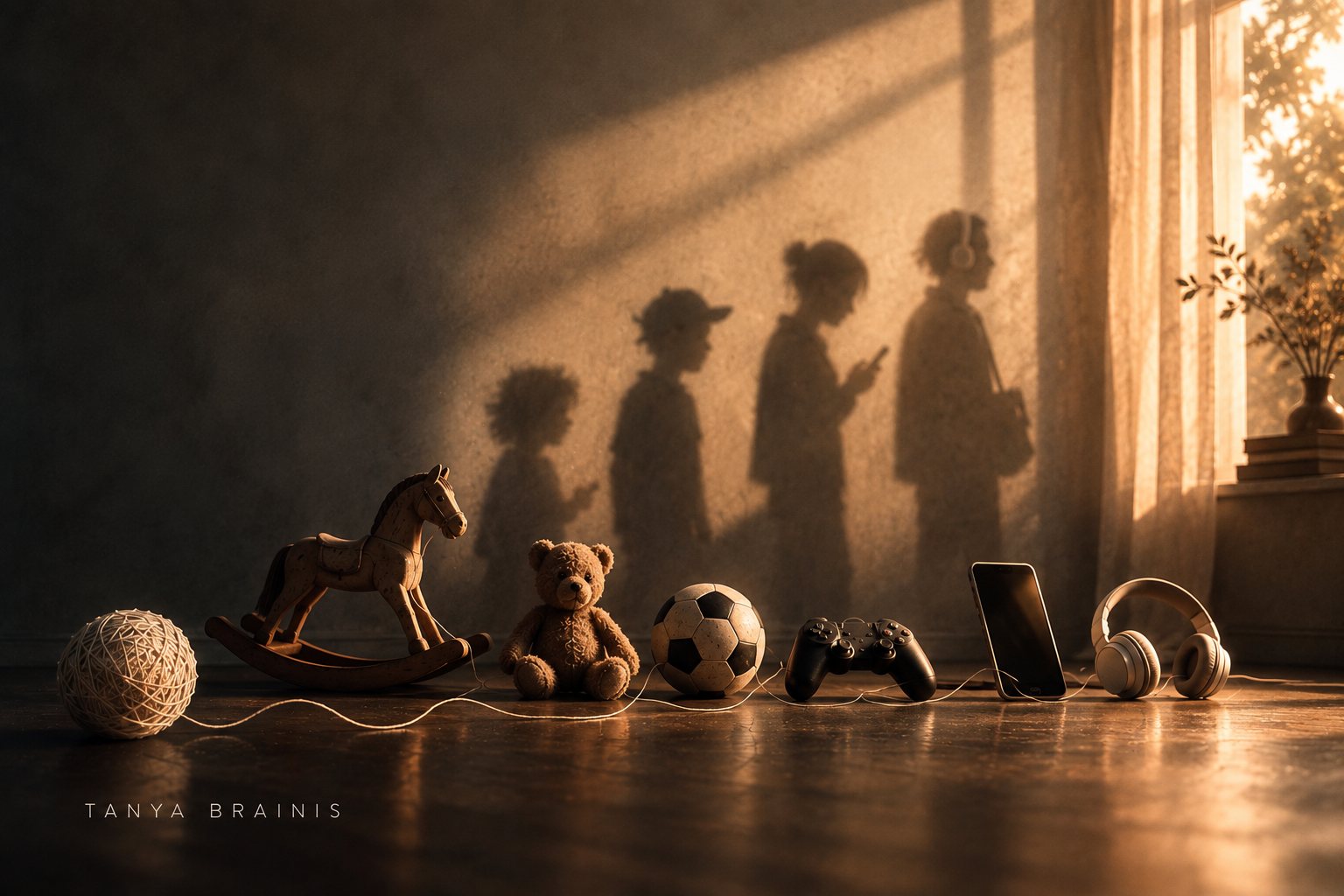
Есть фраза, которая, кажется, переживает поколения.
«А вот я в твоем возрасте…»
Дальше может быть что угодно.
Я сам ходил в школу. Я уже помогал родителям. Я не спорил со взрослыми. Я не сидел целыми днями в телефоне. Я гулял на улице до темноты. Я сам решал свои проблемы. Меня никто никуда не возил.
И чаще всего мы говорим это совершенно искренне.
Мы не пытаемся сделать детям хуже.
Мы просто рассказываем им о мире, который знаем лучше всего, о своем.
Но в какой момент история о нашем детстве превращается в аргумент о том, каким должно быть их детство?
У нас действительно было по другому.
Я не хочу говорить, что наше детство было трудным.
Тогда мы вообще не обязательно воспринимали его таким.
Оно просто было другим.
В нем не было интернета и смартфонов. Мы иначе общались, иначе искали информацию, иначе проводили свободное время. Родители могли не знать, где ребенок находится несколько часов, и это не всегда воспринималось как чрезвычайная ситуация.
В нем было много прекрасного.
И я совсем не хочу обесценивать этот опыт только потому, что сегодня мир изменился.
Но есть одна проблема.
То, что было нормой нашего детства, не становится правильным только потому, что мы через это прошли.
Мир, в котором растут наши дети, уже другой.
И иногда мне кажется, что мы соглашаемся с этим во всем, кроме воспитания.
Мы не отказываемся от стиральной машины потому, что наши бабушки стирали руками.
Не выбрасываем навигатор потому, что наши родители ездили по бумажной карте.
Не предлагаем детям отказаться от современной медицины, транспорта или технологий, чтобы они узнали, «как раньше люди справлялись».
Прогресс, который облегчает физическую жизнь, кажется нам естественным.
Но когда следующему поколению становится немного легче эмоционально, мы иногда начинаем беспокоиться.
Не разбалуем ли?
Не вырастут ли слишком мягкими?
Не привыкнут ли к хорошему?
А как они потом столкнутся с настоящей жизнью?
Но современное детство тоже может быть трудным.
Просто его трудности не всегда похожи на наши.
И, возможно, одна из наших ошибок заключается в том, что нам трудно признать серьезной ту проблему, которой не существовало в нашем собственном детстве.
У меня двое детей.
Дочери восемнадцать. Сыну тринадцать.
Всего пять лет разницы.
Одна семья. Одна мама. Во многом одни и те же семейные правила.
И все равно иногда я слышу от дочери:
«А вот когда я была в его возрасте…»
И каждый раз улыбаюсь.
Потому что вот оно.
Всего пять лет, и человек уже сравнивает два детства.
И она права.
Ее детство действительно было другим.
Технологии изменились. Социальные сети изменились. Школа изменилась. Мы, родители, изменились. Я сама стала другой.
Даже двое детей в одной семье не растут в одинаковых условиях.
Тогда насколько разумно сравнивать жизнь сегодняшнего тринадцатилетнего ребенка с жизнью его отца или матери в тринадцать?
Сколько лет вообще должно пройти, чтобы наше собственное детство начало казаться нам эталоном детства?
Пять?
Двадцать?
Сорок?
Мой муж иногда рассказывает сыну, сколько километров ему приходилось ходить пешком в детстве.
И я поймала себя на одной мысли.
В этой истории самой по себе нет ничего неправильного.
Наоборот.
Мне нравится, когда родители рассказывают детям, какими они были маленькими.
Когда папа ходил несколько километров пешком.
Когда мама боялась чего-то, что сегодня кажется смешным.
Когда у нас не было вещей, которые наши дети считают совершенно обычными.
Это семейная история.
Так дети узнают нас не только как маму и папу, но и как людей, которые тоже когда то были детьми.
Проблема появляется всего в одном маленьком слове.
«Поэтому».
Я ходил несколько километров пешком. Поэтому и ты можешь.
Меня никто не забирал. Поэтому и тебя не нужно.
Мне никто не помогал. Поэтому ты должен справиться сам.
Со мной взрослые не обсуждали свои решения. Поэтому и я не обязан ничего тебе объяснять.
В этот момент опыт перестает быть историей.
Он становится меркой.
Есть еще одна фраза, которую дети слышат постоянно:
«Поставь себя на мое место».
Мы часто называем это эмпатией.
Но действительно ли это она?
Иногда за этой фразой скрывается совсем другой запрос:
Проживи мои обстоятельства, почувствуй то, что чувствовал я, и тогда ты поймешь, почему я прав.
Но почему ребенок вообще должен становиться на место родителя?
Почему ему нужно пережить наши обстоятельства, чтобы уважать наш опыт?
Эмпатия ведь не требует одинаковой биографии.
Мне не нужно пережить чужую потерю, чтобы признать чужую боль.
Мне не нужно прожить чужое детство, чтобы попытаться его понять.
И, возможно, родительству гораздо нужнее обратное движение.
Не просить ребенка поставить себя на наше место в прошлом, а попытаться самим поставить себя на его место в настоящем.
Не спросить:
«А что бы я делала в тринадцать?»
А спросить:
«Каково быть этим тринадцатилетним человеком сегодня?»
Это совсем другой вопрос.
Уважение или подчинение?
Эта тема становится гораздо сложнее, когда мы выходим за пределы одной семьи.
Потому что у каждой культуры свои представления о воспитании.
Свои традиции.
Своя религия.
Свое понимание семьи, авторитета, обязанностей детей перед родителями.
Многие из нас выросли с очень понятным правилом:
старших нужно уважать.
Я тоже считаю уважение важной ценностью.
Но с возрастом мне стало интересно другое:
что именно мы называем уважением?
Не перебивать?
Не спорить?
Делать то, что сказал взрослый?
Не задавать неудобных вопросов?
Не говорить «нет»?
Не иметь права голоса, пока сам не стал взрослым?
Родитель и ребенок, конечно, не равны по ответственности.
Тринадцатилетний ребенок не должен принимать все семейные решения наравне со взрослым.
Иногда родитель обязан сказать «нет».
Иногда установить правило.
Иногда позволить ребенку столкнуться с последствиями собственного решения.
Но неравенство ответственности не означает отсутствие права голоса.
Можно услышать ребенка и не согласиться.
Можно позволить ему спорить и не изменить решение.
Можно оставаться взрослым, не требуя беспрекословного подчинения.
И, возможно, нам стоит иногда спрашивать себя:
если ребенок никогда не имел права подвергать сомнению решения взрослых, откуда у него должна внезапно появиться способность самостоятельно думать, когда ему исполнится восемнадцать?
«Нас так воспитывали. И ничего»
Это, пожалуй, один из самых сильных аргументов любого поколения.
Да.
Выросли.
Но способность человека адаптироваться к определенным условиям еще не доказывает, что именно эти условия были необходимы для его развития.
При этом я не считаю, что ребенку нужно убрать с дороги все трудности.
Совсем наоборот.
Он будет проигрывать. Получать плохие оценки. Ссориться с друзьями. Слышать «нет». Ждать. Ошибаться. Разочаровываться. Работать ради того, чего хочет. Исправлять последствия собственных решений.
Одна из самых сложных задач родителя заключается в том, чтобы не бросаться спасать ребенка от каждой неприятной эмоции.
И я сама не всегда знаю, где проходит эта граница.
Возможно, иногда я слишком защищаю своих детей.
Возможно, иногда вмешиваюсь там, где стоило позволить им справиться самостоятельно.
Я не знаю, правильно ли воспитываю их.
И мне кажется важным иметь смелость это признать.
Но я все чаще вижу разницу между двумя совершенно разными вещами:
не убрать камень с дороги ребенка
и
положить камень на эту дорогу самому только потому, что когда то он лежал на моей.
Мне иногда говорят:
«Ты не знаешь, что жизнь приготовила твоим детям».
Это правда.
Не знаю.
Я не знаю, с какими потерями они столкнутся. Кто разобьет им сердце. Кто их предаст. Какие ошибки они совершат. Какие решения окажутся неправильными. Будут ли у них финансовые трудности. Как сложатся их семьи. Какие события вообще произойдут в мире, когда им будет тридцать или сорок.
Но именно поэтому мне трудно понять идею, что я должна заранее сделать их жизнь жестче, чтобы подготовить к неизвестному будущему.
Жизнь вполне способна оказаться трудной без помощи родителей.
Я не могу подготовить детей ко всем возможным ударам.
Но могу попытаться дать им фундамент, с которым они однажды встретят эти удары.
Опыт того, что можно попросить о помощи.
Что ошибка не делает тебя плохим человеком.
Что твое «нет» имеет значение.
Что чувства можно называть.
Что любовь не исчезает после конфликта.
Что близость не нужно заслуживать удобством.
И, возможно, именно человек, у которого было безопасное место, способен однажды выдержать мир, который безопасным не будет.
Дать лучшее не значит дать всё
Есть еще одна важная граница.
Когда я говорю, что хочу дать детям лучшее, я не имею в виду жизнь без ограничений.
И тем более не имею в виду жертвовать собой.
Я не хочу однажды сказать:
«Я всю жизнь положила на вас».
Потому что вслед за этой фразой слишком легко появляется счет.
Я столько сделала. Я столько отдала. Я от столького отказалась.
Теперь будь благодарен.
Звони.
Приезжай.
Живи так, чтобы мои жертвы оказались не напрасными.
Мне ближе другое понимание ответственности.
Дать детям лучшее из того, что я действительно могу дать, не уничтожая ради этого себя и не превращая данное в их будущий долг.
Они могут услышать от меня «нет».
Могут не получить желаемого.
Могут быть недовольны моим решением.
Но для меня есть огромная разница между:
«Я не могу или не считаю правильным это тебе дать»
и
«Я не дам тебе этого, потому что у меня этого тоже не было».
Чем больше я думаю об этом, тем сильнее мне кажется, что самый неудобный вопрос этой темы обращен вообще не к нашим детям.
Он обращен к нам.
Что мы чувствуем, когда нашим детям в чем то легче, чем было нам?
Радость?
Конечно.
Гордость от того, что смогли дать больше?
Наверное.
Страх, что они окажутся неприспособленными к жизни?
Безусловно.
Но давайте назовем еще одно чувство, о котором говорить гораздо неприятнее.
Зависть.
Можно ли завидовать собственному ребенку?
Сам вопрос звучит почти неприлично.
Мы любим своих детей. Хотим для них лучшего. Работаем ради них. Отдаем им время, деньги, силы.
Как можно им завидовать?
И все же иногда это чувство может прятаться совсем не там, где мы привыкли искать зависть.
Почему ему можно сказать родителю «нет», если мне было нельзя?
Почему ее спрашивают, чего она хочет, если меня никто не спрашивал?
Почему его забирают из школы, если я ходил сам?
Почему ее утешают, если мне говорили перестать плакать?
Почему он может отказаться от того, что ему не нравится, если я просто делал то, что мне велели?
И иногда внутри этого живет даже обида.
А почему у тебя должно быть легче?
Мы, конечно, редко произносим ее именно так.
Мы выбираем гораздо более благородные объяснения.
«Я готовлю тебя к жизни».
«Ты должен стать самостоятельным».
«Никто с тобой потом нянчиться не будет».
«Жизнь тебя жалеть не станет».
И все это может быть правдой.
Но иногда за правильными словами стоит тот ребенок, которым когда то были мы сами.
Ребенок, которого не спросили.
Не забрали.
Не утешили.
Заставили.
Не позволили отказаться.
И теперь рядом с нашим ребенком, который получает все это от нас, он как будто спрашивает:
«А почему ему можно было дать то, чего не дали мне?»
Мне кажется, в самом этом чувстве нет ничего постыдного, если мы способны его увидеть.
Опасность начинается тогда, когда наша непрожитая обида превращается в метод воспитания.
Когда вместо того, чтобы признать: «Мне этого очень не хватало», мы решаем:
«Значит, и тебе это не нужно».
Есть еще одна форма родительской любви, которую гораздо сложнее распознать.
Потому что внешне она выглядит почти идеально.
Мы ищем ребенку лучшую школу.
Записываем его на спорт.
Музыку.
Танцы.
Языки.
Репетиторов.
Соревнования.
Потом начинаем думать об университете.
О профессии.
О будущем.
И все это называется очень красивыми словами:
«Я хочу дать ему возможности».
Но где заканчиваются возможности и начинается наш собственный сценарий его жизни?
Ты будешь заниматься теннисом.
Почему?
Потому что это дисциплина.
Ты не бросишь музыкальную школу.
Почему?
Потому что столько лет уже потрачено.
Ты поступишь в хороший университет.
Потому что без образования сейчас никуда.
Ты выберешь нормальную профессию.
Потому что я лучше понимаю жизнь.
Ты закончишь эту секцию.
Потому что я за нее плачу.
И есть совсем короткая фраза, которой можно закончить практически любой разговор с ребенком:
«Потому что я так решил».
Иногда ребенка действительно нужно научить не бросать начатое после первого разочарования.
Но иногда стоит задать себе гораздо более неприятный вопрос:
Он учится преодолевать трудности или годами осуществляет мою мечту, которую никогда не выбирал?
Потому что нереализованные родительские амбиции удивительно легко маскируются под заботу о будущем ребенка.
Мы хотим, чтобы он достиг того, чего не достигли мы.
Получил образование, которого не получили мы.
Заработал больше.
Поднялся выше.
Стал спортсменом.
Музыкантом.
Врачом.
Юристом.
Предпринимателем.
И однажды можно обнаружить, что мы дали ребенку огромное количество возможностей.
Кроме одной: возможности не захотеть того, чего хотим для него мы.
Гордиться своими детьми естественно.
И я не думаю, что в этом есть что то неправильное.
Но существует очень тонкая граница, после которой достижения ребенка начинают становиться родительским социальным капиталом.
Мой сын выиграл.
Моя дочь поступила.
Мой ребенок читает с четырех лет.
У нас пять тренировок в неделю.
Она занимается балетом.
Он играет в сильнейшей команде.
Посмотрите на медаль.
Посмотрите на грамоту.
Посмотрите, какого ребенка я вырастил.
И тогда возникает очень неудобный вопрос:
Для кого ребенок продолжает это делать?
Для себя?
Или потому, что давно понял, каким его особенно приятно показывать другим?
Иногда мы даже не замечаем, как ребенок становится частью нашего собственного образа.
Успешный ребенок успешных родителей.
И это касается не только учебы или спорта.
Иногда мы устраиваем ребенку невероятный день рождения.
Декорации.
Фотограф.
Огромный торт.
Идеальная площадка.
Аниматоры.
Десятки гостей.
Красивые фотографии.
И все это действительно может быть прекрасным праздником.
Но есть один неприятный вопрос:
если бы никто из взрослых этого не увидел, если бы нельзя было показать фотографии, если бы никто не сказал «вау», мы устроили бы тот же самый праздник?
А если ребенок хотел нескольких друзей, пиццу и бассейн, а получил мероприятие на пятьдесят человек, чей день рождения мы на самом деле праздновали?
Это не означает, что красивые праздники, дорогие секции или амбициозные планы плохи.
Вопрос опять не в действии.
Вопрос в том, для кого мы это делаем.
Мы отвечаем за детей.
Принимаем за них огромное количество решений.
Мы действительно знаем больше.
Иногда видим последствия дальше.
И пока ребенок маленький, ответственность за многие решения неизбежно остается на взрослом.
Но ответственность не означает владение.
Ребенок не наш проект.
Он не обязан становиться доказательством того, что мы хорошие родители.
Не обязан реализовать наши амбиции.
Не обязан выбирать профессию, которой мы сможем гордиться.
Не обязан продолжать занятие только потому, что мы уже вложили в него деньги.
Не обязан создавать семью по нашему сценарию.
Не обязан хотеть той жизни, которую мы считаем хорошей.
Мы очень часто говорим:
«Я просто хочу, чтобы мой ребенок был счастлив».
Это прекрасная фраза.
Но есть вопрос посложнее:
а готовы ли мы к тому, что его представление о счастливой жизни совершенно не совпадет с нашим?
Что он не выберет престижную профессию.
Не захочет продолжать семейное дело.
Откажется от спорта, которому отдал десять лет.
Не поступит туда, куда мы мечтали.
Выберет работу, которую мы не понимаем.
Построит жизнь, которой мы сами никогда бы не выбрали.
И скажет:
«Мне так хорошо».
Сможем ли мы действительно порадоваться?
Или почувствуем, что после всего, что мы для него сделали, он распорядился своей жизнью неправильно?
Наверное, одна из самых сложных вещей в родительстве заключается не в том, чтобы дать ребенку возможности.
А в том, чтобы однажды выдержать, что он воспользуется ими совсем не так, как мы представляли.
Я не думаю, что наше поколение наконец поняло, как правильно воспитывать детей.
Скорее всего, нет.
Наши родители делали то, что считали правильным, исходя из своего опыта, своей культуры, обстоятельств и знаний.
Их родители делали то же самое.
Мы делаем то же самое сегодня.
И я почти уверена, что однажды мои дети расскажут мне о каких то вещах из своего детства совсем не так, как помню их я.
Возможно, они укажут мне на ошибки, которых сегодня я даже не замечаю.
И, наверное, одной из самых сложных проверок моего собственного представления об уважении станет именно этот момент.
Смогу ли я услышать:
«Мам, мне тогда было больно»
и не ответить:
«Но я же хотела как лучше».
Смогу ли я позволить им иметь свою версию собственного детства?
Потому что благодарность и боль могут существовать одновременно.
Можно любить родителей и не соглашаться с ними.
Можно иметь прекрасное детство и все равно помнить моменты, которые ранили.
Можно быть благодарным за то, что тебе дали, и решить не передавать что то дальше.
Каждому поколению свое детство.
Наше не было правильнее.
Их не обязательно легче.
Оно просто другое.
И, возможно, наша задача не в том, чтобы подготовить детей к будущему, заставив их повторить наше прошлое.
Не в том, чтобы сделать их продолжением наших нереализованных желаний.
Не в том, чтобы построить для них жизнь, которой потом можно будет гордиться перед другими.
А в том, чтобы передать им то ценное, чему научило нас наше собственное детство, не требуя прожить его снова.
И однажды позволить им сделать то, что для родителя бывает удивительно трудно.
Выбрать свою жизнь.
Поэтому теперь, когда хочется сказать:
«А вот я в твоем возрасте…»
мне хочется остановиться буквально на секунду.
И спросить себя:
Я сейчас рассказываю ребенку свою историю?
Или объясняю ему, почему он должен ее повторить?
И, возможно, еще один вопрос.
Самый неприятный.
Я действительно хочу, чтобы мой ребенок прожил свою жизнь?
Или все таки ту, которую я уже придумала для него?
Письмо
Every generation has its own childhood
Our childhood can be a story for our children. It should not become instructions for their lives.
There is a phrase that seems to survive generations.
“When I was your age…”
Anything could happen next.
I walked to school on my own. I helped my parents. I did not argue with adults. I did not spend all day on my phone. I played outside until dark. I solved my own problems. Nobody drove me anywhere.
And most often we say this completely sincerely.
We are not trying to make things worse for children.
We simply tell them about the world we know best, our own.
But at what point does a story about our childhood become an argument about what their childhood should be like?
It really was different for us.
I don't want to say that our childhood was difficult.
Back then we didn’t necessarily perceive him that way at all.
It was just different.
There was no Internet or smartphones. We communicated differently, looked for information differently, spent our free time differently. Parents might not know where the child was for several hours, and this was not always perceived as an emergency.
There was a lot of beauty in it.
And I don’t want to devalue this experience at all just because the world has changed today.
But there's one problem.
What was the norm in our childhood does not become right just because we went through it.
The world in which our children are growing up is already different.
And sometimes it seems to me that we agree with this in everything except education.
We don't give up washing machines because our grandmothers washed by hand.
We don’t throw away our navigator because our parents used a paper map.
We don’t ask children to give up modern medicine, transportation, or technology so they can learn “how people used to cope”.
Progress that makes physical life easier seems natural to us.
But when things get a little easier emotionally for the next generation, we sometimes start to worry.
Aren't we going to spoil it?
Will they grow too soft?
Won’t they get used to good things?
How will they then face real life?
But modern childhood can also be difficult.
It’s just that his difficulties are not always similar to ours.
And perhaps one of our mistakes is that it is difficult for us to recognize as serious a problem that did not exist in our own childhood.
I have two children.
The daughter is eighteen. The son is thirteen.
Only five years difference.
One family. One mother. Much the same family rules.
And still sometimes I hear from my daughter:
“But when I was his age...”
And I smile every time.
Because here it is.
Only five years old, and a person is already comparing two childhoods.
And she's right.
Her childhood was indeed different.
Technology has changed. Social media has changed. The school has changed. We parents have changed. I myself became different.
Even two children in the same family do not grow up in the same conditions.
Then how reasonable is it to compare the life of a thirteen-year-old child today with the life of his father or mother at thirteen?
How many years must pass before our own childhood begins to seem to us the standard of childhood?
Five?
Twenty?
Forty?
My husband sometimes tells his son how many kilometers he had to walk as a child.
And I caught myself thinking one thing.
There is nothing wrong with this story in itself.
On the contrary.
I love it when parents tell their children what they were like when they were little.
When dad walked several kilometers.
When mom was afraid of something that seems funny today.
When we didn't have things that our children consider completely ordinary.
This is a family story.
This is how children recognize us not only as mom and dad, but also as people who were also once children.
The problem appears in just one small word.
"Therefore."
I walked several kilometers. That's why you can too.
Nobody took me. That's why you don't need it either.
Nobody helped me. So you have to handle it yourself.
Adults did not discuss their decisions with me. That's why I don't have to explain anything to you.
At this point the experience ceases to be a story.
He becomes a measuring stick.
There is another phrase that children hear all the time:
“Put yourself in my shoes.”
We often call this empathy.
But is it really her?
Sometimes this phrase hides a completely different request:
Live my circumstances, feel what I felt, and then you will understand why I am right.
But why should a child take the place of a parent at all?
Why does he need to experience our circumstances in order to respect our experience?
Empathy does not require the same biography.
I don't have to experience someone else's loss to acknowledge someone else's pain.
I don't need to live someone else's childhood to try to understand it.
And perhaps parenting needs the opposite movement much more.
Not ask children to put themselves in our place in the past, but try to put ourselves in their place now.
Don't ask:
“What would I do at thirteen?”
And ask:
“What is it like to be this thirteen-year-old person today?”
This is a completely different question.
Respect or submission?
This topic becomes much more complex when we move beyond the confines of one family.
Because every culture has its own ideas about education.
Your own traditions.
Your own religion.
Your understanding of family, authority, and the responsibilities of children to their parents.
Many of us grew up with a very clear rule:
Elders must be respected.
I also consider respect an important value.
But as I got older, I became interested in something else:
what exactly do we call respect?
Don't interrupt?
Don't argue?
Do what the adult says?
Don't ask awkward questions?
Don't say no?
Not have the right to vote until you become an adult?
Parent and child, of course, are not equal in responsibility.
A thirteen-year-old child should not make all family decisions as an adult.
Sometimes a parent has a responsibility to say no.
Sometimes set a rule.
Sometimes allow your child to face the consequences of their own decisions.
But inequality of responsibility does not mean lack of voting rights.
You can hear a child and disagree.
You can let him argue and not change his mind.
You can remain an adult without demanding unquestioning obedience.
And perhaps we should sometimes ask ourselves:
if a child has never had the right to question an adult's decisions, how is he supposed to suddenly have the ability to think for himself when he turns eighteen?
“We were raised that way. And nothing"
This is perhaps one of the most powerful arguments of any generation.
Yes.
We grew up.
But a person’s ability to adapt to certain conditions does not yet prove that these particular conditions were necessary for his development.
At the same time, I do not believe that a child needs to remove all difficulties from the road.
Quite the opposite.
He will lose. Get bad grades. Quarreling with friends. Hearing “no.” Wait. To be wrong. Be disappointed. Work for what he wants. Correct the consequences of your own decisions.
One of the most difficult tasks of a parent is to not rush to save the child from every unpleasant emotion.
And I myself don’t always know where this border is.
Perhaps sometimes I am too protective of my children.
Perhaps sometimes I intervene where I should have let them handle things on their own.
I don't know if I'm raising them right.
And I think it's important to have the courage to admit it.
But I increasingly see the difference between two completely different things:
do not remove the stone from the child's path
and
put a stone on this road yourself only because it once lay on mine.
Sometimes they tell me:
“You don’t know what life has in store for your children.”
It's true.
I don't know.
I don't know what losses they will face. Who will break their heart. Who will betray them? What mistakes will they make? Which decisions will turn out to be wrong. Will they have financial difficulties? How will their families turn out? What events will generally happen in the world when they are thirty or forty.
But that's why I have a hard time understanding the idea that I should make their lives tougher in advance in order to prepare them for an unknown future.
Life can be quite difficult without the help of parents.
I can't prepare kids for every possible shock.
But I can try to give them the foundation with which they will one day face these blows.
Experience what it is possible to ask for help.
That making a mistake doesn't make you a bad person.
That your “no” matters.
What feelings can be called.
That love does not disappear after conflict.
That intimacy doesn't have to be earned by convenience.
And perhaps it is the person who had a safe place who will one day be able to withstand a world that will not be safe.
Giving the best does not mean giving everything
There is another important boundary.
When I say I want to give my children the best, I don't mean a life without limits.
And especially I don’t mean sacrificing myself.
I don't want to say one day:
“I’ve put my whole life on you.”
Because after this phrase the bill appears too easily.
I've done so much. I gave so much. I gave up so much.
Now be grateful.
Call.
Come.
Live so that my sacrifices are not in vain.
A different understanding of responsibility is closer to me.
To give the children the best of what I can really give, without destroying myself for the sake of it and without turning this into their future duty.
They may hear “no” from me.
They may not get what they want.
They may be unhappy with my decision.
But for me there is a huge difference between:
“I can’t or don’t think it’s right to give this to you”
and
"I won't give it to you because I didn't have it either."
The more I think about it, the more it seems to me that the most uncomfortable question on this topic is not addressed to our children at all.
He is addressed to us.
How do we feel when something is easier for our children than it was for us?
Joy?
Of course.
Pride from being able to give more?
Probably.
Fear that they will be unadapted to life?
Absolutely.
But let's name another feeling that is much more unpleasant to talk about.
Envy.
Is it possible to envy your own child?
The question itself sounds almost indecent.
We love our children. We want the best for them. We work for them. We give them time, money, energy.
How can you envy them?
And yet, sometimes this feeling can hide in a completely different place than where we are used to looking for envy.
Why can he tell his parent “no” if I couldn’t?
Why do they ask her what she wants if no one asked me?
Why is he being taken out of school if I went alone?
Why is she being consoled when I was told to stop crying?
Why can he refuse something he doesn't like if I just did what I was told?
And sometimes even resentment lives inside it.
Why should it be easier for you?
Of course, we rarely pronounce it that way.
We choose much more noble explanations.
“I’m preparing you for life.”
"You must become independent."
“No one will babysit you later.”
“Life will not spare you.”
And all this may be true.
But sometimes behind the right words is the child that we once were.
The child who was not asked.
The child nobody picked up.
Nobody comforted them.
The child who was forced.
The child who was not allowed to refuse.
And now, next to our child, who receives all this from us, he seems to ask:
“Why was it possible to give him something that was not given to me?”
It seems to me that there is nothing shameful in this feeling itself if we are able to see it.
The danger begins when our unlived resentment turns into a method of education.
When, instead of admitting: “I missed this so much,” we decide:
"So you don't need it either."
There is another form of parental love that is much more difficult to recognize.
Because from the outside she looks almost perfect.
We are looking for the best school for our child.
We sign him up for sports.
Music.
Dancing.
Languages.
Tutors.
Competitions.
Then we start thinking about university.
About the profession.
About the future.
And all this is called in very beautiful words:
“I want to give him opportunities.”
But where do the possibilities end and our own scenario of his life begin?
You will play tennis.
Why?
Because it's discipline.
You won't quit music school.
Why?
Because so many years have already been spent.
You will get into a good university.
Because you can’t get anywhere without education now.
You will choose a normal profession.
Because I understand life better.
You will complete this section.
Because I'm paying for it.
And there is a very short phrase that can end almost any conversation with a child:
“Because I decided so.”
Sometimes a child really needs to be taught not to quit after the first disappointment.
But sometimes it’s worth asking yourself a much more unpleasant question:
Is he learning to overcome difficulties or is he fulfilling my dream for years that he never chose?
Because unfulfilled parental ambitions are surprisingly easily disguised as concern for the child’s future.
We want him to achieve what we haven't achieved.
I received an education that we did not receive.
Earned more.
Rising higher.
Became an athlete.
A musician.
A doctor.
Lawyer.
An entrepreneur.
And one day you may discover that we have given the child a huge number of opportunities.
Except for one thing: the possibility of not wanting what we want for him.
It's natural to be proud of your children.
And I don't think there's anything wrong with that.
But there is a very fine line after which the child’s achievements begin to become parental social capital.
My son won.
My daughter got in.
My child has been reading since he was four years old.
We have five training sessions a week.
She does ballet.
He plays in the strongest team.
Look at the medal.
Look at the certificate.
Look what kind of child I raised.
And then a very uncomfortable question arises:
Who does the child continue to do this for?
For himself?
Or because he has long understood what version of himself they most enjoy showing to others?
Sometimes we don't even notice how the child becomes part of our own image.
Successful child of successful parents.
And this applies not only to studies or sports.
Sometimes we throw a child an incredible birthday party.
Decorations.
Photographer.
Huge cake.
An ideal platform.
Animators.
Dozens of guests.
Beautiful photos.
And all this can really be a wonderful holiday.
But there is one unpleasant question:
if no adults saw this, if no photos could be shown, if no one said “wow”, would we have had the same party?
What if a kid wanted a few friends, pizza and a pool, but got an event for fifty people, whose birthday were we actually celebrating?
This does not mean that beautiful holidays, expensive sections or ambitious plans are bad.
The question again is not about action.
The question is who are we doing this for.
We are responsible for children.
We make a huge number of decisions for them.
We actually know better.
Sometimes we see further consequences.
And while the child is small, responsibility for many decisions inevitably remains with the adult.
But responsibility does not mean ownership.
The child is not our project.
It doesn't have to be proof that we are good parents.
Not obligated to realize our ambitions.
We are not obligated to choose a profession that we can be proud of.
There is no obligation to continue the activity just because we have already invested money in it.
You don't have to start a family according to our scenario.
We are not obligated to want the life that we consider good.
We very often say:
“I just want my baby to be happy.”
This is a wonderful phrase.
But there is a more difficult question:
Are we ready for the fact that his idea of a happy life will not coincide with ours at all?
That he will not choose a prestigious profession.
He will not want to continue the family business.
He will give up the sport to which he devoted ten years.
It won't go where we dreamed.
Will choose a job that we don't understand.
Will build a life that we ourselves would never choose.
And he will say:
“I feel so good.”
Can we really rejoice?
Or will we feel that after everything we have done for him, he has managed his life incorrectly?
Perhaps one of the most difficult things about parenting is not giving your child opportunities.
And the point is to one day endure the fact that he will use them in a completely different way than we imagined.
I don't think our generation has finally figured out how to raise children properly.
Most likely not.
Our parents did what they thought was right based on their experience, their culture, their circumstances and their knowledge.
Their parents did the same.
We do the same today.
And I’m almost sure that one day my children will tell me about some things from their childhood that are completely different from the way I remember them.
Perhaps they will point out mistakes that I don’t even notice today.
And, probably, one of the most difficult tests of my own idea of respect will be this very moment.
Will I be able to hear:
"Mom, I was in pain then"
and not answer:
“But I wanted the best.”
Will I be able to allow them to have their own version of their own childhood?
Because gratitude and pain can exist at the same time.
You can love your parents and disagree with them.
You can have a wonderful childhood and still remember the moments that hurt.
You can be grateful for what you have been given and decide not to pass it on.
Each generation has its own childhood.
Ours couldn't have been more correct.
They are not necessarily easier.
It's just different.
And perhaps our job is not to prepare our children for the future by making them repeat our past.
It is not about making them a continuation of our unfulfilled desires.
It’s not about building a life for them that they can then be proud of in front of others.
It’s about passing on to them the valuable things that our own childhood taught us, without requiring us to live it again.
And one day allowing them to do something that can be surprisingly difficult for a parent.
Choose your life.
So now, when I want to say:
“But I’m your age...”
I just want to stop for a second.
And ask yourself:
Am I telling my child my story now?
Or do I explain to him why he should repeat it?
And perhaps one more question.
The most unpleasant.
Do I really want my child to live his life?
Or is it the one that I already came up with for him?
Письмо
Cada generación tiene su propia infancia
Nuestra infancia puede ser una historia para nuestros hijos, pero no debe convertirse en instrucciones para su vida.
Hay una frase que parece sobrevivir a generaciones.
«Cuando yo tenía tu edad…»
Cualquier cosa podría pasar a continuación.
Yo iba solo a la escuela. Ayudaba a mis padres. No discutía con los adultos. No pasaba el día entero con el teléfono. Jugaba afuera hasta que oscurecía. Resolvía mis propios problemas. Nadie me llevaba a ninguna parte.
Y la mayoría de las veces decimos esto con toda sinceridad.
No estamos tratando de empeorar las cosas para los niños.
Simplemente les hablamos del mundo que mejor conocemos, el nuestro.
Pero, ¿en qué momento una historia sobre nuestra infancia se convierte en una discusión sobre cómo debería ser su infancia?
Realmente fue diferente para nosotros.
No quiero decir que nuestra infancia fue difícil.
En aquel entonces no necesariamente lo percibíamos así en absoluto.
Era simplemente diferente.
No había Internet ni teléfonos inteligentes. Nos comunicamos de manera diferente, buscamos información de manera diferente, pasamos nuestro tiempo libre de manera diferente. Es posible que los padres no supieran dónde estaba el niño durante varias horas y esto no siempre se percibía como una emergencia.
Había mucha belleza en ello.
Y no quiero devaluar en absoluto esta experiencia sólo porque el mundo ha cambiado hoy.
Pero hay un problema.
Lo que era la norma en nuestra infancia no se vuelve correcto solo porque pasamos por ello.
El mundo en el que crecen nuestros hijos ya es diferente.
Y a veces me parece que estamos de acuerdo con esto en todo menos en educación.
No renunciamos a las lavadoras porque nuestras abuelas lavaban a mano.
No tiramos nuestro navegador porque nuestros padres usaran un mapa de papel.
No les pedimos a los niños que abandonen la medicina, el transporte o la tecnología modernos para que puedan aprender “cómo solía afrontar la gente”.
El progreso que facilita la vida física nos parece natural.
Pero cuando las cosas se vuelven un poco más fáciles emocionalmente para la próxima generación, a veces empezamos a preocuparnos.
¿No lo vamos a estropear?
¿Se ablandarán demasiado?
¿No se acostumbrarán a las cosas buenas?
¿Cómo afrontarán entonces la vida real?
Pero la infancia moderna también puede ser difícil.
Lo que pasa es que sus dificultades no siempre son similares a las nuestras.
Y quizás uno de nuestros errores sea que nos cuesta reconocer como grave un problema que no existió en nuestra propia infancia.
Tengo dos hijos.
La hija tiene dieciocho años. El hijo tiene trece años.
Solo cinco años de diferencia.
Una familia. Una madre. Las mismas reglas familiares.
Y todavía a veces escucho de mi hija:
“Pero cuando yo tenía su edad...”
Y sonrío cada vez.
Porque aquí está.
Sólo cinco años y una persona ya está comparando dos infancias.
Y ella tiene razón.
Su infancia fue realmente diferente.
La tecnología ha cambiado. Las redes sociales han cambiado. La escuela ha cambiado. Los padres hemos cambiado. Yo mismo me volví diferente.
Ni siquiera dos niños de la misma familia crecen en las mismas condiciones.
Entonces, ¿cuán razonable es comparar la vida de un niño de trece años hoy con la vida de su padre o de su madre cuando tenían trece años?
¿Cuántos años deben pasar antes de que nuestra propia infancia empiece a parecernos el estándar de la infancia?
¿Cinco?
¿Veinte?
¿Cuarenta?
Mi marido a veces le cuenta a su hijo cuántos kilómetros tenía que caminar cuando era niño.
Y me sorprendí pensando una cosa.
No hay nada malo en esta historia en sí misma.
Al contrario.
Me encanta cuando los padres les cuentan a sus hijos cómo eran cuando eran pequeños.
Cuando papá caminó varios kilómetros.
Cuando mamá tenía miedo de algo que hoy parece gracioso.
Cuando no teníamos cosas que nuestros hijos consideraban completamente normales.
Esta es una historia familiar.
Es así como los niños nos reconocen no sólo como mamá y papá, sino también como personas que alguna vez también fueron niños.
El problema aparece en tan sólo una pequeña palabra.
"Por lo tanto."
Caminé varios kilómetros. Por eso tú también puedes hacerlo.
Nadie me llevó. Por eso tú tampoco lo necesitas.
Nadie me ayudó. Así que tienes que encargarte tú mismo.
Los adultos no hablaban conmigo de sus decisiones. Por eso no tengo que explicarte nada.
En este punto la experiencia deja de ser una historia.
Se convierte en una vara de medir.
Hay otra frase que los niños escuchan todo el tiempo:
“Ponte en mi lugar.”
A esto a menudo lo llamamos empatía.
¿Pero es realmente ella?
A veces, esta frase esconde una petición completamente diferente:
Vive mis circunstancias, siente lo que yo sentí, y entonces entenderás por qué tengo razón.
Pero ¿por qué un niño debería ocupar el lugar de un padre?
¿Por qué necesita experimentar nuestras circunstancias para respetar nuestra experiencia?
La empatía no requiere la misma biografía.
No tengo que experimentar la pérdida de otra persona para reconocer el dolor de otra persona.
No necesito vivir la infancia de otra persona para intentar comprenderla.
Y quizás la crianza de los hijos necesite mucho más el movimiento opuesto.
No pedirles a los hijos que se pongan en nuestro lugar en el pasado, sino intentar ponernos nosotros en el suyo hoy.
No preguntes:
“¿Qué haría yo a los trece años?”
Y pregunta:
“¿Cómo es ser esta persona de trece años hoy?”
Esta es una pregunta completamente diferente.
¿Respeto o sumisión?
Este tema se vuelve mucho más complejo cuando vamos más allá de los límites de una familia.
Porque cada cultura tiene sus propias ideas sobre la educación.
Tus propias tradiciones.
Tu propia religión.
Su comprensión de la familia, la autoridad y las responsabilidades de los niños hacia sus padres.
Muchos de nosotros crecimos con una regla muy clara:
Hay que respetar a los mayores.
También considero el respeto un valor importante.
Pero a medida que crecí, me interesé en otra cosa:
¿Qué llamamos exactamente respeto?
¿No interrumpas?
¿No discutas?
¿Hacer lo que dice el adulto?
¿No hagas preguntas incómodas?
¿No digas que no?
¿No tienes derecho a votar hasta que seas mayor de edad?
Por supuesto, padres e hijos no tienen la misma responsabilidad.
Un niño de trece años no debería tomar todas las decisiones familiares cuando sea adulto.
A veces un padre tiene la responsabilidad de decir no.
A veces establece una regla.
A veces permita que su hijo enfrente las consecuencias de sus propias decisiones.
Pero la desigualdad de responsabilidad no significa falta de derecho a voto.
Puedes escuchar a un niño y no estar de acuerdo.
Puedes dejarlo discutir y no cambiar de opinión.
Puedes seguir siendo adulto sin exigir obediencia incondicional.
Y tal vez deberíamos preguntarnos a veces:
si un niño nunca ha tenido derecho a cuestionar las decisiones de un adulto, ¿cómo se supone que de repente tendrá la capacidad de pensar por sí mismo cuando cumpla dieciocho años?
“Nos criaron así. Y nada"
Este es quizás uno de los argumentos más poderosos de cualquier generación.
Sí.
Crecimos.
Pero la capacidad de una persona para adaptarse a determinadas condiciones no prueba todavía que esas condiciones particulares fueran necesarias para su desarrollo.
Al mismo tiempo, no creo que un niño deba eliminar todas las dificultades del camino.
Todo lo contrario.
Él perderá. Sacar malas notas. Pelear con amigos. Escuchar "no". Esperar. Estar equivocado. Estar decepcionado. Trabaja por lo que él quiere. Corrige las consecuencias de tus propias decisiones.
Una de las tareas más difíciles de un padre es no apresurarse a salvar al niño de cada emoción desagradable.
Y yo mismo no siempre sé dónde está esta frontera.
Quizás a veces soy demasiado protector con mis hijos.
Quizás a veces intervengo cuando debería haberles dejado manejar las cosas por su cuenta.
No sé si los estoy criando bien.
Y creo que es importante tener el coraje de admitirlo.
Pero veo cada vez más la diferencia entre dos cosas completamente diferentes:
no retires la piedra del camino del niño
y
Pon una piedra en este camino solo porque una vez estuvo sobre el mío.
A veces me dicen:
“No sabes lo que la vida les depara a tus hijos.”
Es verdad.
No lo sé.
No sé qué pérdidas enfrentarán. ¿Quién les romperá el corazón? ¿Quién los traicionará? ¿Qué errores cometerán? Qué decisiones resultarán equivocadas. ¿Tendrán dificultades financieras? ¿Cómo resultarán sus familias? Qué acontecimientos sucederán generalmente en el mundo cuando tengan treinta o cuarenta años.
Pero es por eso que me cuesta entender la idea de que debo hacerles la vida más difícil de antemano para prepararlos para un futuro desconocido.
La vida puede ser bastante difícil sin la ayuda de los padres.
No puedo preparar a los niños para cada posible shock.
Pero puedo intentar darles las bases con las que algún día afrontarán estos golpes.
Experimenta lo que es posible pedir ayuda.
Que cometer un error no te convierte en una mala persona.
Que tu “no” importa.
Cómo se pueden llamar sentimientos.
Ese amor no desaparece después del conflicto.
Esa intimidad no tiene por qué ganarse por conveniencia.
Y tal vez es la persona que tenía un lugar seguro la que algún día podrá resistir un mundo que no será seguro.
Dar lo mejor no significa darlo todo
Hay otro límite importante.
Cuando digo que quiero darles lo mejor a mis hijos no me refiero a una vida sin límites.
Y sobre todo no me refiero a sacrificarme.
No quiero decir un día:
“He puesto toda mi vida en ti.”
Porque tras esta frase la factura aparece con demasiada facilidad.
He hecho mucho. Di tanto. Renuncié a tantas cosas.
Ahora sé agradecido.
Llama.
Ven.
Vive para que mis sacrificios no sean en vano.
Tengo más cerca una comprensión diferente de la responsabilidad.
Para darles a los niños lo mejor de lo que realmente puedo dar, sin destruirme por ello y sin convertir esto en su deber futuro.
Es posible que escuchen un “no” de mi parte.
Puede que no consigan lo que quieren.
Es posible que no estén contentos con mi decisión.
Pero para mí hay una diferencia enorme entre:
“No puedo o no creo que sea correcto darte esto”
y
“No te lo daré porque yo tampoco lo tenía.”
Cuanto más lo pienso, más me parece que la pregunta más incómoda sobre este tema no está dirigida en absoluto a nuestros hijos.
Él está dirigido a nosotros.
¿Cómo nos sentimos cuando algo es más fácil para nuestros hijos que para nosotros?
¿Alegría?
Por supuesto.
¿Orgullo de poder dar más?
Probablemente.
¿Miedo a no estar adaptados a la vida?
Absolutamente.
Pero mencionemos otro sentimiento del que es mucho más desagradable hablar.
Envidia.
¿Es posible envidiar a tu propio hijo?
La pregunta en sí suena casi indecente.
Amamos a nuestros hijos. Queremos lo mejor para ellos. Trabajamos para ellos. Les damos tiempo, dinero, energía.
¿Cómo puedes envidiarlos?
Y, sin embargo, a veces este sentimiento puede esconderse en un lugar completamente diferente al que estamos acostumbrados a buscar la envidia.
¿Por qué él puede decirle “no” a sus padres si yo no puedo?
¿Por qué le preguntan qué quiere si nadie me preguntó?
¿Por qué lo sacan de la escuela si fui solo?
¿Por qué la consuelan cuando me dijeron que dejara de llorar?
¿Por qué puede rechazar algo que no le gusta si simplemente hice lo que me dijeron?
Y a veces incluso el resentimiento vive en su interior.
¿Por qué debería ser más fácil para ti?
Por supuesto, rara vez lo pronunciamos así.
Elegimos explicaciones mucho más nobles.
“Te estoy preparando para la vida.”
"Debes volverte independiente."
“Nadie te cuidará más tarde.”
“La vida no te perdonará.”
Y todo esto puede ser cierto.
Pero a veces detrás de las palabras adecuadas está el niño que alguna vez fuimos.
El niño al que no se le preguntó.
Al que nadie fue a recoger.
Al que nadie consoló.
Al que obligaron.
Al que no le permitieron negarse.
Y ahora, al lado de nuestro hijo, que recibe todo esto de nosotros, parece preguntar:
“¿Por qué fue posible darle algo que a mí no me fue dado?”
Me parece que no hay nada de vergonzoso en este sentimiento en sí mismo si somos capaces de verlo.
El peligro comienza cuando nuestro resentimiento no vivido se convierte en un método de educación.
Cuando, en vez de admitir: «Esto me hizo mucha falta», decidimos:
"Así que tú tampoco lo necesitas."
Hay otra forma de amor paternal que es mucho más difícil de reconocer.
Porque desde fuera parece casi perfecta.
Estamos buscando la mejor escuela para nuestro hijo.
Lo apuntamos a hacer deporte.
Música.
Baile.
Idiomas.
Tutores.
Competiciones.
Entonces empezamos a pensar en la universidad.
Sobre la profesión.
Sobre el futuro.
Y todo esto se llama con palabras muy bonitas:
“Quiero darle oportunidades.”
Pero, ¿dónde terminan las posibilidades y dónde comienza nuestro propio escenario de su vida?
Jugarás al tenis.
¿Por qué?
Porque es disciplina.
No dejarás la escuela de música.
¿Por qué?
Porque ya han pasado tantos años.
Entrarás en una buena universidad.
Porque ahora no se puede llegar a ninguna parte sin educación.
Elegirás una profesión normal.
Porque entiendo mejor la vida.
Completarás esta sección.
Porque estoy pagando por ello.
Y hay una frase muy corta que puede terminar casi cualquier conversación con un niño:
“Porque así lo decidí.”
A veces es realmente necesario enseñar a un niño a no darse por vencido después de la primera decepción.
Pero a veces vale la pena hacerse una pregunta mucho más desagradable:
¿Está aprendiendo a superar las dificultades o está cumpliendo mi sueño de años que nunca eligió?
Porque, sorprendentemente, las ambiciones incumplidas de los padres se disfrazan con facilidad como preocupación por el futuro del niño.
Queremos que logre lo que nosotros no hemos logrado.
Recibí una educación que nosotros no recibimos.
Ganó más.
Subiendo más alto.
Se convirtió en atleta.
Un músico.
Un médico.
Abogado.
Un emprendedor.
Y algún día descubrirás que le hemos dado al niño una gran cantidad de oportunidades.
Salvo una cosa: la posibilidad de no querer lo que queremos para él.
Es natural estar orgulloso de sus hijos.
Y no creo que haya nada malo en eso.
Pero hay una línea muy fina a partir de la cual los logros del niño comienzan a convertirse en capital social de los padres.
Mi hijo ganó.
Mi hija entró.
Mi hijo lee desde que tenía cuatro años.
Tenemos cinco sesiones de entrenamiento a la semana.
Ella hace ballet.
Juega en el equipo más fuerte.
Mira la medalla.
Mira el certificado.
Mira qué clase de niño crié.
Y entonces surge una pregunta muy incómoda:
¿Para quién sigue haciendo esto el niño?
¿Para sí mismo?
¿O porque hace tiempo que comprendió qué versión de sí mismo les gusta más mostrar a los demás?
A veces ni siquiera nos damos cuenta de cómo el niño pasa a formar parte de nuestra propia imagen.
Hijo exitoso de padres exitosos.
Y esto no sólo se aplica a los estudios o al deporte.
A veces le organizamos a un niño una fiesta de cumpleaños increíble.
Decoraciones.
Fotógrafo.
Pastel enorme.
Una plataforma ideal.
Animadores.
Decenas de invitados.
Hermosas fotos.
Y todo esto puede ser realmente unas vacaciones maravillosas.
Pero hay una pregunta desagradable:
si ningún adulto hubiera visto esto, si no se hubieran podido mostrar fotos, si nadie hubiera dicho “wow”, ¿habríamos tenido la misma fiesta?
¿Qué pasaría si un niño quisiera algunos amigos, pizza y una piscina, pero tuviera un evento para cincuenta personas, ¿el cumpleaños de quién íbamos a celebrar?
Esto no significa que unas vacaciones bonitas, tramos caros o planes ambiciosos sean malos.
Una vez más, la cuestión no es acerca de la acción.
La pregunta es ¿para quién hacemos esto?
Somos responsables de los niños.
Tomamos una gran cantidad de decisiones por ellos.
De hecho, lo sabemos mejor.
A veces vemos más consecuencias.
Y aunque el niño es pequeño, la responsabilidad de muchas decisiones inevitablemente recae en el adulto.
Pero responsabilidad no significa propiedad.
El niño no es nuestro proyecto.
No tiene por qué ser una prueba de que somos buenos padres.
No estamos obligados a realizar nuestras ambiciones.
No estamos obligados a elegir una profesión de la que podamos estar orgullosos.
No hay obligación de continuar la actividad sólo porque ya hemos invertido dinero en ella.
No es necesario formar una familia según nuestro escenario.
No estamos obligados a querer la vida que consideramos buena.
Muy a menudo decimos:
“Solo quiero que mi bebé sea feliz.”
Esta es una frase maravillosa.
Pero hay una pregunta más difícil:
¿Estamos preparados para el hecho de que su idea de una vida feliz no coincida en absoluto con la nuestra?
Que no elegirá una profesión prestigiosa.
No querrá continuar con el negocio familiar.
Renunciará al deporte al que dedicó diez años.
No irá donde soñamos.
Elegiremos un trabajo que no entendemos.
Construirá una vida que nosotros mismos nunca elegiríamos.
Y él dirá:
“Me siento tan bien.”
¿Podemos realmente regocijarnos?
¿O sentiremos que después de todo lo que hemos hecho por él, ha gestionado mal su vida?
Quizás una de las cosas más difíciles de la crianza de los hijos sea no brindarle oportunidades a su hijo.
Y el punto es algún día soportar el hecho de que los usará de una manera completamente diferente a la que imaginamos.
No creo que nuestra generación finalmente haya descubierto cómo criar a los niños adecuadamente.
Lo más probable es que no.
Nuestros padres hicieron lo que creían correcto basándose en su experiencia, su cultura, sus circunstancias y sus conocimientos.
Sus padres hicieron lo mismo.
Hacemos lo mismo hoy.
Y estoy casi seguro de que algún día mis hijos me contarán algunas cosas de su infancia que son completamente diferentes a como yo los recuerdo.
Quizás me señalen errores que hoy ni siquiera noto.
Y, probablemente, una de las pruebas más difíciles de mi propia idea del respeto será este mismo momento.
¿Podré escuchar:
"Mamá, entonces me dolía"
y no responder:
“Pero yo quería lo mejor.”
¿Podré permitirles tener su propia versión de su propia infancia?
Porque la gratitud y el dolor pueden existir al mismo tiempo.
Puedes amar a tus padres y no estar de acuerdo con ellos.
Puedes tener una infancia maravillosa y aún recordar los momentos que duelen.
Puedes estar agradecido por lo que te han dado y decidir no transmitirlo.
Cada generación tiene su propia infancia.
La nuestra no podría haber sido más correcta.
No son necesariamente más fáciles.
Es simplemente diferente.
Y quizás nuestro trabajo no sea preparar a nuestros hijos para el futuro haciéndolos repetir nuestro pasado.
No se trata de hacer de ellos una continuación de nuestros deseos insatisfechos.
No se trata de construirles una vida de la que luego puedan estar orgullosos frente a los demás.
Se trata de transmitirles las cosas valiosas que nos enseñó nuestra propia infancia, sin que tengamos que volver a vivirla.
Y un día permitirles hacer algo que puede resultar sorprendentemente difícil para un padre.
Elige tu vida.
Entonces ahora, cuando quiero decir:
“Pero tengo tu edad...”
Sólo quiero parar por un segundo.
Y pregúntate:
¿Le estoy contando mi historia a mi hijo ahora?
¿O le explico por qué debería repetirlo?
Y quizás una pregunta más.
Lo más desagradable.
¿Realmente quiero que mi hijo viva su vida?
¿O es el que ya se me ocurrió para él?